The Remington 700 is one of the most readily available, and popular, rifles in North America. From ultralight mountain guns to the tactical intervention tools of police and military units to long range lead sleds, the 700 been built in every format imaginable, often right from the factory. You don’t achieve this degree of success, and certainly not this level of market penetration, without supplying a solid rifle. But let’s be honest: the 700 has a significant handicap, and it’s so integral that many shooters don’t even consider trying to address it: the action itself is floppy.
We can’t blame Big Green for the floppy action, really. It’s more than fifty years old in 700 guise; if you count the receiver as a direct evolution of the 721, you’re looking at a design that went into production in 1948. Does it work? Absolutely. But it was built to be readily machined on the technology commercially available in the dying days of World War II. No one ever expected it to be the basis of generations of rifles intended to hit the same fifty cent piece ten times out of ten at a distance of two hundred yards. At that time, the suggestion that any normal person would ever achieve that kind of accuracy would have simply seemed insane.
 But we live in a different world today. Ammunition tolerances have been tightened; match ammo is for sale in big box stores. Optics are light years ahead of anything our grandfathers would have dreamed of; the art of shooting itself has been advanced by study and experimentation. Through advances in technology and advances in skill, we have reached a point at which the open and lightweight action of the 700 is actually a hindrance to pure accuracy.
Amongst high-level shooters, this is established fact. But the 700 continues to be a popular base on which to build precision rifles. Why? For the same reason many popular guns remain popular long after they have been superseded prom a purely technological standpoint: logistics. The aftermarket for the Remington 700 is absolutely vast. Triggers, stocks, barrels…the entire gun can essentially be replaced by making a single trip to a well-appointed gun store.
But no aftermarket barrel, no superb trigger, no custom stock will take the flex out of the action. And believe us, when filmed with high-speed cameras, rifles flop around like fish out of water during the firing cycle. So what is to be done?
 This is the problem posed to the engineers at Ultimatum Precision. They’re not the first company to build bolt actions, by any stretch. Any number of companies will sell you a custom action on which to build a precision rifle.
But the approach Ultimatum has taken yields an action that is not only fantastically rigid, but retains the footprint of a Remington 700, and introduces a whole new level of modularity within the action itself. Aftermarket barrels, stocks, and triggers just bolt on with, at worst, minor inletting for slight design variations between 700 models. The Ultimatum U300 action is, essentially, full custom rifle territory, for bolt-on effort. No, they’re not the only company ever to take this approach; Surgeon Rifles build a similar action, as do Defiance Machine. But we’re not aware of any action which has the modularity of the U300, and while the roughly thirteen hundred dollar price tag might seem steep to anyone not well versed in custom precision rifles, comparing it to the alternatives makes it seem almost a bargain.
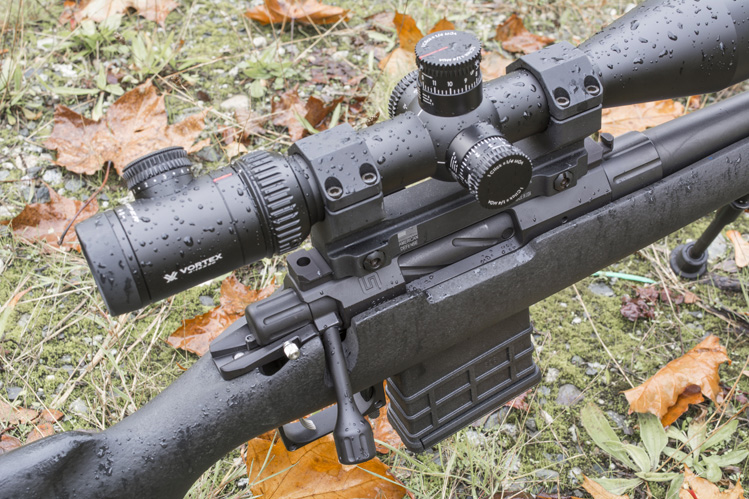
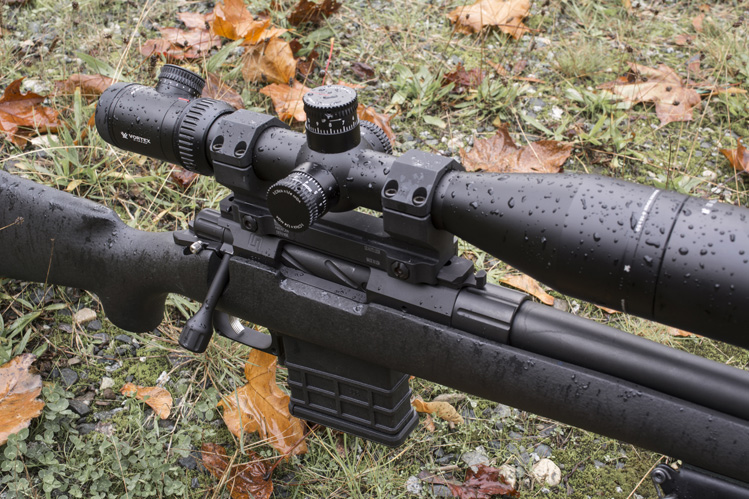
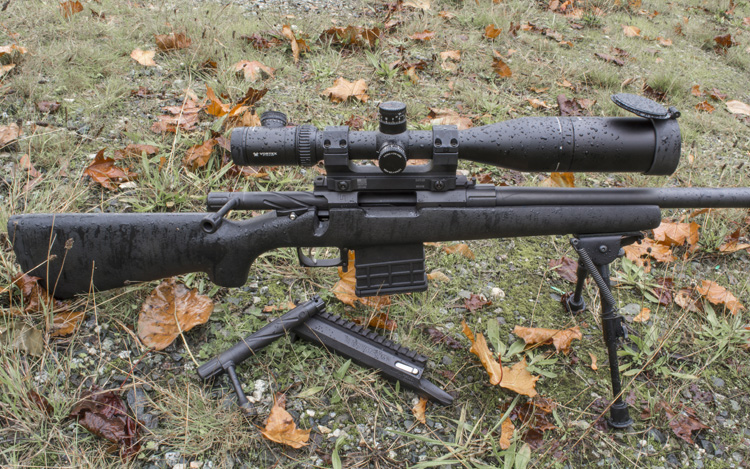
The tester rifle as supplied was in a factory Remington stock. The team at Ultimatum had dropped in a TriggerTech trigger, one of their own barrels, and simple bottom metal to allow for the use of AICS-type magazines. The parts just bolted together, and they handed the rifle over. Done.
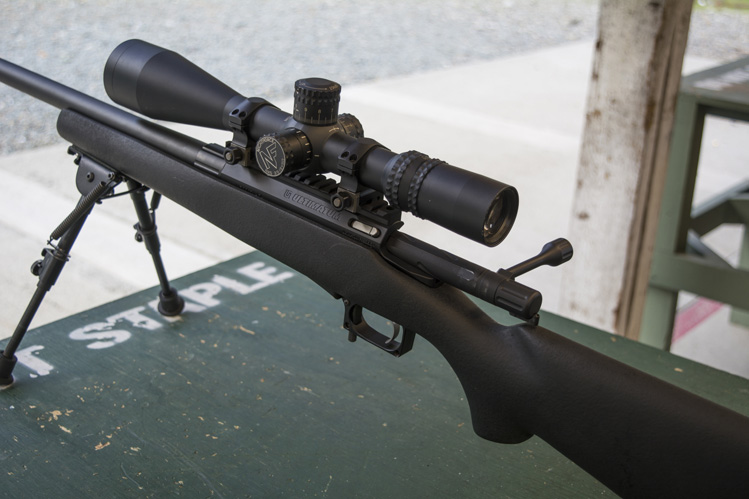 Now, to be fair, it won’t always be that easy, and they don’t ship their own engineers along with the action. So depending on the barrel, for example, you may need some minor work to dial in the chamber depth in perfectly. The U300 is designed to work with a barrel nut arrangement like a Savage rifle, but the threads are Remington sized: 1 1/16”x16TPI. While the barrel nut is the preferred arrangement from the perspective of the Ultimatum engineers, they assure us that the action is entirely capable of direct-threading a barrel like a typical Remington 700. The big advantage of the barrel nut system is, of course, that assuming the barrel is correctly sized, it should be possible to put a chamber GO gauge in, screw in a barrel, lock it down, and start shooting. It really is that easy.
And our tester was almost shocking. When we first saw the plain factory stock and unassuming appearance, we were surprised: we've shot plenty of rifles with custom actions, but never out of a factory stock. But for demonstration purposes, it was fascinating. Even the low comb height and cheap polymer didn’t present a serious impediment: shooting with a bipod and a sand bag under the toe of the stock, we could shoot accurately enough that our immediate problem became a search for ammo we couldn’t outperform. That’s not a problem we’re used to having.
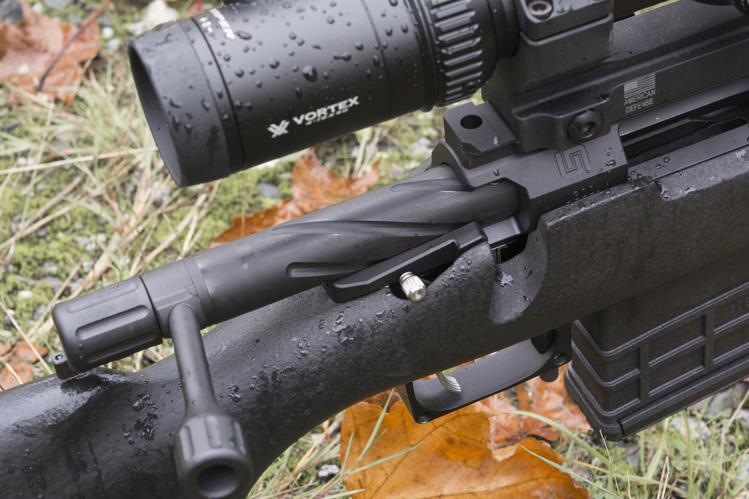
Having accepted the argument for a custom action, we began to consider the advantages of the U300 specifically. As mentioned, it’s an extremely modular design, with both bolt and ejection port available in either left or right hand, and a floating, easily removed bolt head which allows for easy calibre changes. It also means that shooters running a chambering based on the .308WIN, for instance, but who find that the current crop of extra-long bullets don’t work well in short-action rifles, can easily drop a .308 bolt face into a long action. Or .338 Lapua Magnum shooters who want the ability to change over to a less expensive or less physically demanding calibre can make major changes with relative ease.
The ejection port, incidentally, is about as small as can be made without compromising on function and that’s part of what gives the U300 its extreme rigidity.
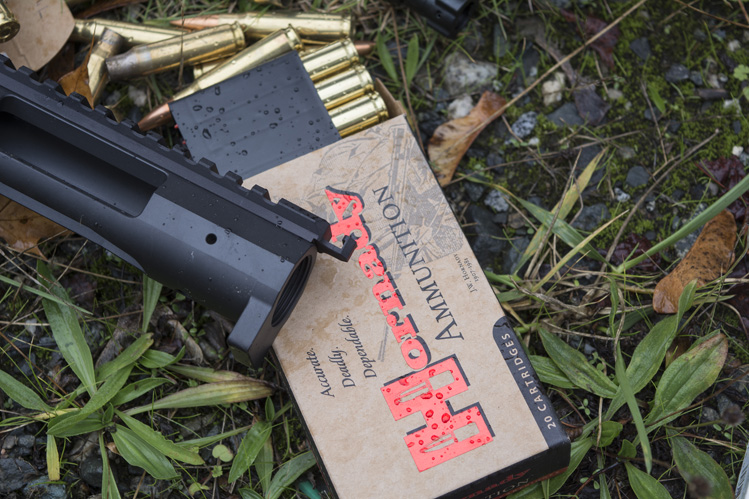 That floating bolt head, which swaps out with the push of a pin, is a three-lug design, which is not only extremely durable but which has the advantage of allowing for a 60-degree throw on the bolt. The Ultimatum Precision U300 is not just accurate. It’s fast. But making it fast also made it accurate: by incorporating a floating bolt head, Ultimatum created a system in which cartridges would automatically centre in the bore every time. There’s no torque being applied to the cartridge rim by a rigid bolt head, so the modularity and the quick action made for an inherently superior design from a pure accuracy perspective.
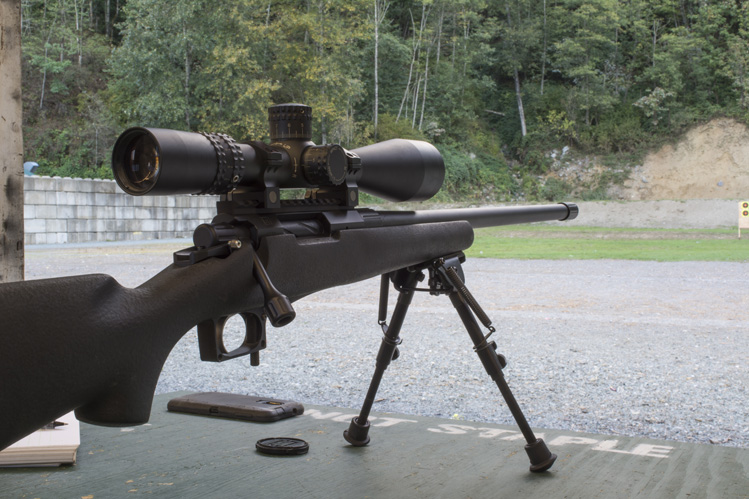 To go along with their quick-change bolt head, the U300 incorporates an out-of-battery safety mechanism which prevents the firing pin from protruding through the bolt face unless the bolt is fully forward and the lugs are locking it in battery. This prevents the rifle from firing should the bolt head be installed incorrectly, as well as preventing the more conventional slam-fire out of battery issues that occasionally happen with some rifles.
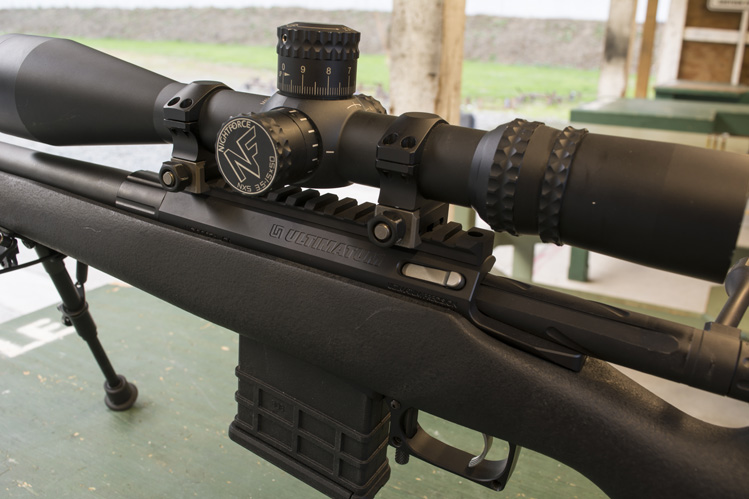
The rail also follows the Ultimatum philosophy of modularity: rather than milling in an integral rail, the Ultimatum Precision U300 ships with a 20 MOA rail mounted with six machine screws and two pins. Milling a rail isn’t hard and Ultimatum could easily incorporate the rail, but they aren’t interested in a rail that can’t be replaced. A broken rail lug (don’t laugh, we’ve seen it happen) would mean scrapping your whole action, and would never allow for the possibility of changing out the rail for one with a different elevation built in. Does Ultimatum have different elevation rails? Well, no. Not yet. “Soon,” was the answer we were given. “Very soon.” The rail comes with a hook on the muzzle end for a mirage shield, should you take an interest in F-class shooting, or you’re actually just that much of a ninja that you need to worry about such things. We’ll happily admit that is well outside our frame of reference, and simply defer to the classic wisdom of assuming that anyone who needs a mirage shield knows who they are and doesn’t need humble magazine writers to explain anything to them. For the rest of you, please pretend you didn’t read the preceding sentence, and go on believing we’re such good shots that our biggest worry is optical distortion introduced by heat shimmer off the barrel.
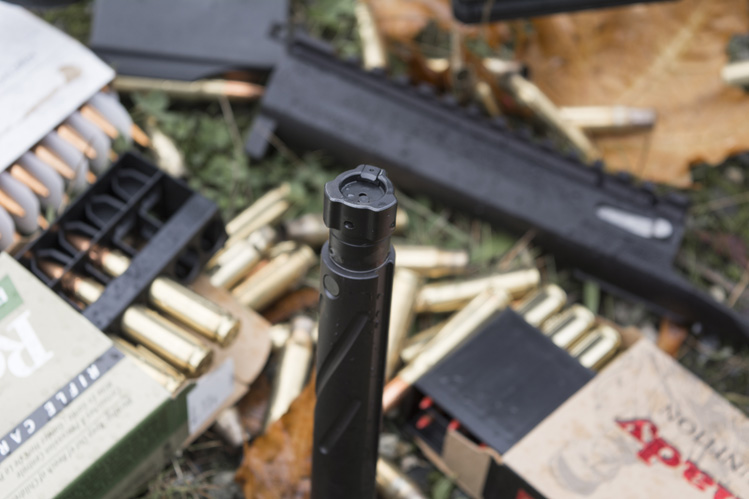 One area in which the push for modularity gave way to the need for brute reliability was the recoil lug: it’s integral, which is wise. As the Precision Rifle Series (PRS) sport gains momentum, one of the notable preferences among competitors is for integral recoil lugs: almost every action that gets used by the serious contenders is built in that manner simply because it’s a critical factor in the way the rifle itself manages recoil. Can you do without one? Yes, you can. Should you? Probably not, if you can avoid it.
The Ultimatum Precision U300 is a solid block of 4340 steel, which is the same steel that Defiance actions are made of and very slightly more expensive than the 4140 Surgeon uses (although practically speaking, the engineers we consulted considered them equally well-suited to the task. But you sure aren’t giving up anything on the materials front) and finished in black nitride and Cerakote for wear and corrosion resistance, chemical resistance, and surface hardness. Consider that some high-dollar actions cost considerably more and come without any surface treatment at all.
 We here at Calibre are fond of reducing things to their most basic level (in part so we can understand them) and accuracy is one thing: repeatability. The more variables that can be controlled, the more a gun can be made to do the same thing the same way at the same time in each firing cycle, the more it will place bullets in precise and repeatable locations. The Ultimatum Precision U300 achieves this repeatability through an extremely tightly controlled manufacturing process, supplying inspection reports with each action that detail the critical dimensions as designed and as measured, listing the pass/fail criteria and certifying that each measurement meets the manufacturer’s requirements. Our example is measured as concentric to the outer surface within 0.024mm, or less than a thousandth of an inch. The distance between the front face of the action and the bolt lugs is within 0.003mm of its design specification; a ten-thousandth of an inch. This is supreme quality control.
Getting down to brass tacks, you can expect to pay between around $1300 and $1500 CAD for your very own Ultimatum action. Now look, we know the U300 isn’t going to be in everyone’s stocking this Christmas. It’s a specialized item and the market for precision this extreme is limited. But one thing is for sure: the Ultimatum Precision U300 is a serious competitor in the custom action world and if you’re considering a world-beating precision rifle, you need to check out the homegrown Canadian option, because it’s not hard to see the advantages of their design. And as a word to the wise, we think there’s a very strong likelihood that these actions are going to be in demand with professional sharpshooters in law enforcement before too long; their reputation is rapidly becoming hard to ignore in certain influential circles, so we won’t be surprised if a line forms pretty quickly at the doorstep of Ultimatum Precision.
 But for now, these have to be the best deal going in precision rifle actions, and that’s great for the shooter. Accuracy is expensive, but there’s no need to make it harder on your pocketbook than it has to be. And when superior quality comes at a superior price, we say: give us Ultimatum Precision.

 SUBSCRIBE TO CALIBRE MAGAZINE
$30.00 / year
SUBSCRIBE TO CALIBRE MAGAZINE
$30.00 / year
 UNAPOLOGETICALLY CANADIAN MEN'S T-SHIRT
$29.00
UNAPOLOGETICALLY CANADIAN MEN'S T-SHIRT
$29.00
 UNAPOLOGETICALLY CANADIAN WOMEN'S T-SHIRT
$29.00
UNAPOLOGETICALLY CANADIAN WOMEN'S T-SHIRT
$29.00