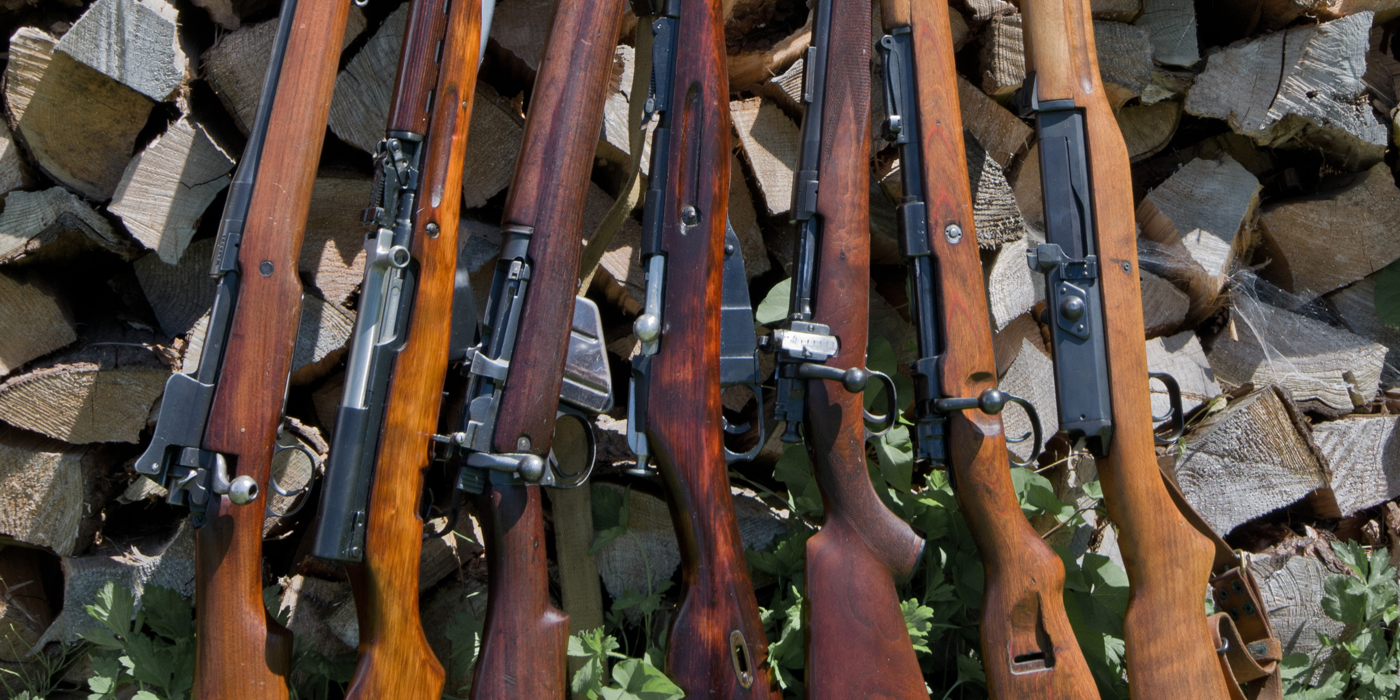
If you're new to shooting, or simply trying to enjoy the sport on the tightest budget possible, the lure of the military surplus rifle is undeniable. This is why so many people enjoy owning a range of long-range caliber rifles. Some of the most tried-and-tested firearm designs on the planet, former military rifles were oftentimes made extremely well; churned out by armoury workers in faraway lands that knew a soldier's life could very well come to rely upon the quality of product they were responsible for producing. But, that doesn't mean all surplus rifles are created equal. In fact, that couldn't be farther from the truth. Entire books have been written about Mosins and Mausers, examining the various nuanced differences between specific eras, iterations, and countries of origin. But we'll leave the detailed ruminations on roll marks and wood grades up to the collectors out there. Here's a guide to the affordable surplus guns you're most likely to find at your local Canadian gun shop.
The SKS
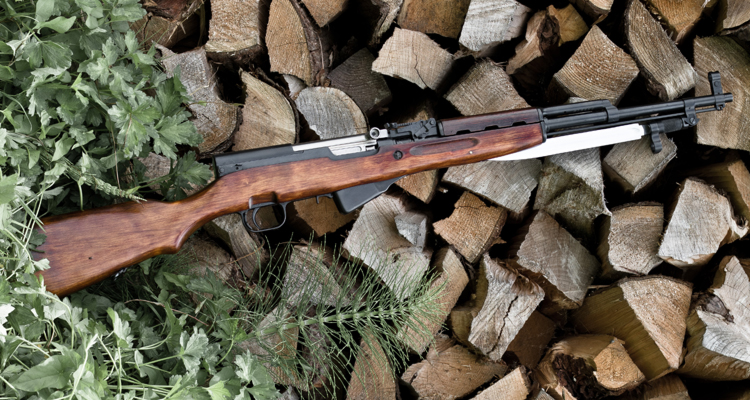 A good price to pay: $200
Calibre: 7.62x39mm
One of the most popular surplus rifles on the market, the Soviet-designed SKS-45 was designed in 1943, entered service in 1945, and has a nice brief name that actually stands for Samozaryadnyj Karabin Sistemy Simonova... or self-loading carbine of the Simonov system, model of 1945. Not terribly attractive and relatively simple in design, the SKS was made obsolete when the Red Army adopted the AK-47; a gun that delivered many of the same benefits as the SKS, albeit at a much lower price tag. However, while Russia rapidly switched their production lines over from the heavily milled SKS to the less labour intensive manufacturing of AK-47s, many COMINTERN countries continued to produce the SKS design they'd licensed from Mother Russia, including the armouries of the Romanian, Albanian, Yugoslavian and most prolifically, the Chinese militaries.
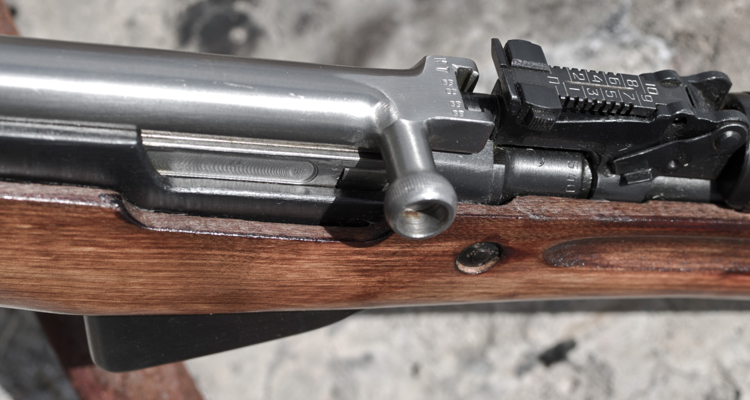 Due to the SKS's widespread use and manufacture, there are now literally tens of millions of them in existence. This overabundance of a rifle that's been utterly outclassed by its more contemporary competitors means one thing: they're cheap. With Chinese examples of the breed available for under $200, they're about the cheapest semi-automatic centre-fire firearm on the Canadian market, and their popularity is further buoyed by the relatively inexpensive 7.62x39mm ammunition they digest. Coming in at roughly $0.20 per round, surplus ammunition is nearly as plentiful as the rifles themselves, and cases of both corrosively primed, and even better non-corrosively primed surplus ammunition can be found across the country with relative ease.
But, due to both the large tolerances in the machining and manufacturing of the various SKS variants made around the world over the course of decades, and the inconsistency of surplus 7.62x39mm ammunition, SKS ownership does come with some caveats... the least surprising of which is that they typically don't prove terribly accurate. And while simply swapping from cheap surplus to expensive commercial ammunition (or handloads) will certainly shrink groups, the SKS will never be a precision rifle; with a rattling bayonet under the barrel, liberally inletted stocks, and a short sight radius, even the best ammunition's attempts will remain somewhat hamstrung by the SKS' inherent design issues.
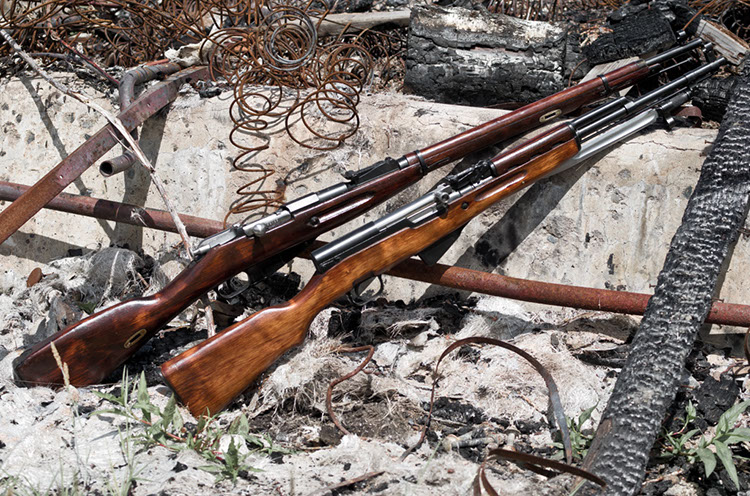 However, while a famous man once claimed that only accurate rifles are interesting, there are plenty of SKS owners that would gladly beg to differ. Citing the combination of the gun's cheap cost, cheap ammunition, and hefty aftermarket support as entertaining alternatives to accuracy, it's entirely possible to build a small collection of SKS' built in various styles, and keep them well-fed for pennies on the dollar when compared to other popular semi-automatic, non-restricted firearms. And hey, while small groupings might impress the folks at the range, the pop cans sitting on a tree stump out by your camp site this summer won't know the difference between a 1 MOA gun and a 5 MOA gun, nor will your wallet, when you can fire five shots out of an SKS for the same price as a single pull of the trigger on something else!
The Mosin-Nagant
 A good price to pay: $150
Calibre: 7.62x54R
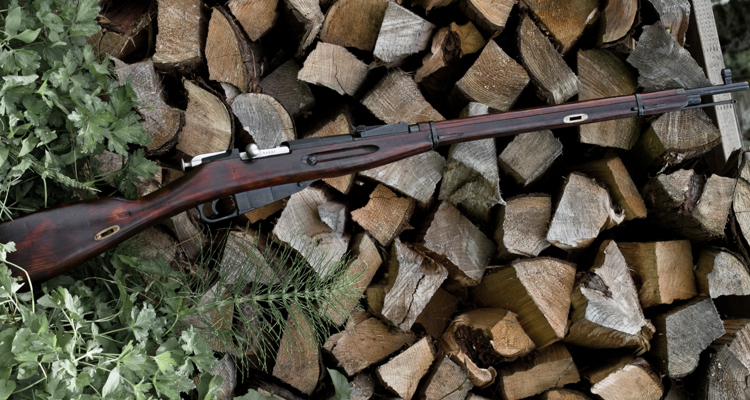
The Russians have a long-standing tradition of designing some of the most world-altering firearms in existence, and then producing them in gargantuan, mind-bending numbers. While most would consider the AK to be perhaps the ultimate expression of this ethos, a case could be made for the Mosin-Nagant being perhaps the best example of this unique phenomenon. Having been developed a full 131 years ago and seen service in nearly every major conflict since, it has long since proven itself both reliable and accurate.
 The combination of two distinct designs concocted by Sergei Mosin and Leon Nagant, the original Mosin-Nagant is known as the M91, designating it as the model (M) of 1891. Produced in great numbers through the turn of the century by the Tula, Izhevsk, and Sestroryetsk arsenals as well as the French arms company Chatellerault, the onset of World War I saw an increased demand for the robust rifle, and both Remington and New England Westinghouse in the United States were contracted to build 1.5 and 1.8 million M91s, respectively. However, as the Russian revolution took hold, the contracts were never completed, leaving New England Westinghouse and Remington to sell their remaining stock to civilians and the US government, who in turn utilized the Russian-designed guns as training firearms.
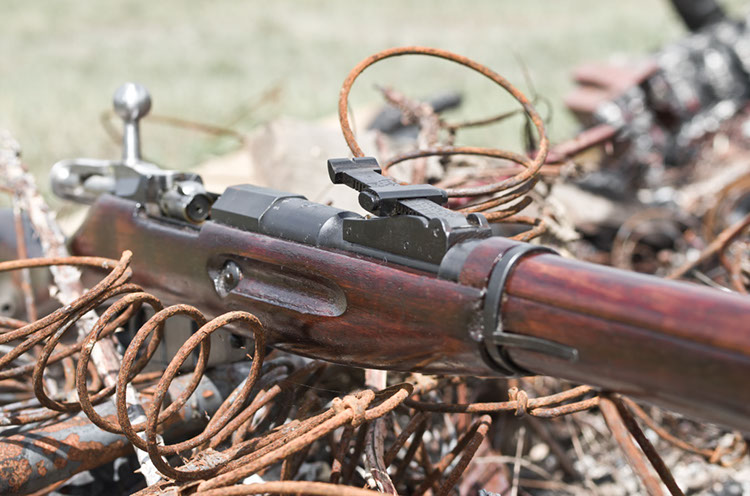
But by 1930 the M91 was looking somewhat haggard. Redesigned slightly to bring the rifle further in line with modern production expectations, the venerable Mosin-Nagant entered World War II as the M91/30, denoting the design changes enacted in 1930. These changes included swapping the expensively-milled hexagonal receivers to round bar-stock receivers, reducing the rifle's overall length, adopting new sights, and the use of split barrel bands. From there, an even-shorter carbine model was issued to rear echelon troops in 1944, and in turn earned the designation M44. Obviously, quite a few other models of Mosin-Nagant are available and of interest to the collector, but for the average Canadian looking for a good shooter, these (along with the Finnish M27 model, which utilized a Mosin-Nagant action, a 27" heavy barrel, and a front sight design not dissimilar from that of the Lee-Enfield No. 4) remain the most popular.
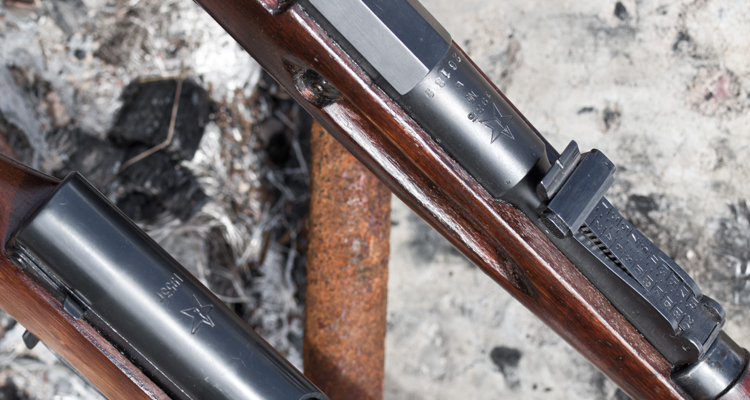 By virtue of their extremely long service record, most Mosin-Nagant's found on the Canadian market have been refurbished by military arsenals and can be expected to shoot relatively well; relatively well being somewhere around 3.5 MOA. However, many Mosin-Nagant's that met the more stringent sniper standards were refurbished after the war, and can occasionally be found lurking on used gun racks disguised as standard, rack-grade M91/30s. Regularly shooting 2 MOA or better, these ex-sniper rifles can be identified by opening the bolt and peering into the receiver. Initially fitted with a scope mount that bolted to the left side of the receiver, the arsenal refurbishing process typically involved removing the mount and filling the holes in the receiver with screws before welding them in place and grinding the outside of the receiver smooth, meaning any ex-sniper M91/30s will bear witness to their former service with the two filled holes visible on the inside, left-hand side of the receiver.
SVT-40
A good price to pay: $250
Calibre: 7.62x54R
One of the most often overlooked surplus firearms on the market today, the SVT-40 is to communism as the M14 was to democracy: a somewhat stillborn big bore battle rifle that, through circumstances well beyond its control, never saw much service.
The SVT-40 was the result of a Soviet design competition held in 1935 in an effort to devise a semi-automatic battle rifle with which the newly formed Red Army could be armed. With two designs submitted, one by Fedor Tokarev (yes, that Tokarev) and one by Sergei Simonov (yes, that Simonov), Stalin chose the latter's AVS-36 initially, but held another competition that saw Tokarev's SVT-38 selected after issues with the AVS-36 came to light. With an ambitious plan to see 2 million rifles enter military circulation in a brief two year span that began in 1939, the SVT-38's production was hampered slightly by the German invasion of Russia, an event that prompted Soviet arsenals to resume production of the much simpler, much more readily manufactured Mosin-Nagant in order to meet wartime demand. However, the appeal of a semi-automatic rifle didn't abate, and three armouries (Tula, Izvhevsk, and Podolsk) continued to produce an improved, lighter version of the design known famously as the SVT-40.
Cherished by the enemy troops that captured them (the German military captured and re-issued so many they actually created and distributed their own operating manual for the SVT-40), the big, hard-hitting Russian rifle was despised by the consistently less educated Russian troops they were issued to. Considered far too complex by many Russian conscripts, the combination of the SVT-40's piston-driven, gas-operated design and Mother Russia's corrosively primed ammunition conspired against the rifle's battlefield effectiveness, especially when it was wielded by troops that considered it an unfathomably complicated and overwrought device. However, in the hands of seasoned, well-trained German troops, the SVT-40 was used to devastating effect, and proved influential in the creation of the German Gewehr 43 semi-automatic rifle.
Now, some seven decades after the SVT's creation, affordable refurbished surplus examples abound. Typically identifiable by their oddly-plum coloured bolts (an unintended by-product of the heat treatment and re-bluing process the rifles were treated to during their refurbishment), the majority of these surplus guns fit, function, and fire just as well as they did when new. But there are some caveats that go along with SVT-40 ownership; the first and foremost being the gun's dependence on decent ammunition. With many of the SVT-40's wartime failures being credited to the large tolerances in Russian-supplied 7.62x54R ammunition, SVT-40s not only shoot much better but also function more reliably with more consistent commercial ammunition, or handloads. Furthermore, most SVT-40s benefit from both a very thorough bore and gas system cleaning, as well as some degree of stock shimming or action bedding to combat their well-documented ability to shift within the soft wooden stocks during firing. Typically a much more involving rifle that asks more of its owner, the SVT-40 has a lot of potential and rewards those that dedicate a modicum of time into learning, cleaning, and tuning their rifle and ammunition to work together, and for this reason should not be considered a larger-scale alternative to the simple and cheap fun offered up by the SKS.
AG-42B Ljungman/Hakim/Rasheed
 A good price to pay: $300
Calibre: 6.5x55 Swedish, 8mm Mauser
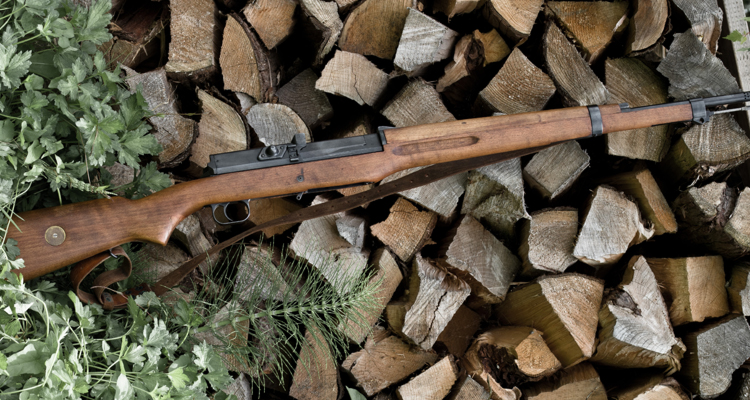
A bit of a black sheep on the surplus firearm market, the Swedish AG-42B and its Egyptian cousins, the Hakim and Rashid rifles, is an oddity to say the least. Developed by a Swede by the name of Erik Eklund, the AG-42 went from design prototype to an issued military rifle in a scant 12 months, entering service in 1942 with the intention of replacing the accurate and venerable, but slow, Mauser M/96 with which Swedish troops were typically armed. It would remain in service with the Swedish military into the mid-sixties, when it was replaced by a Swedish variant of the Heckler & Koch G3.
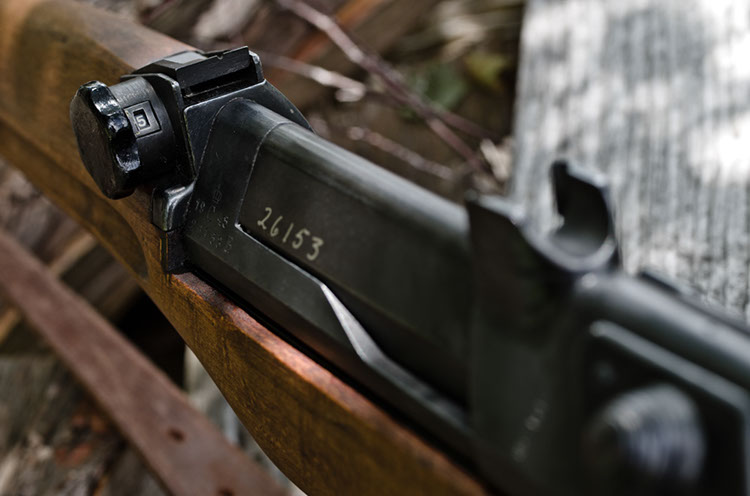
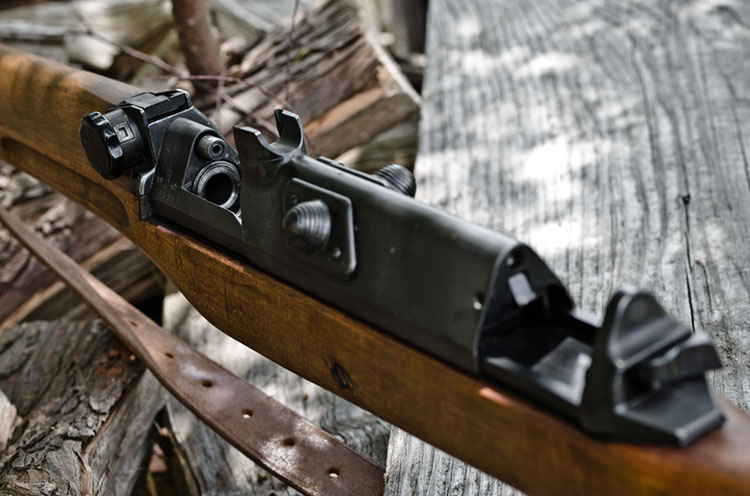 The most notable design feature of the AG-42B's design is its unique combination of the then-popular tilting bolt style of lockup and the oddly forward-thinking direct-impingement gas system. But, while it was initially credited with reducing the complexity of the gas-operated rifle, the AG-42's gas system had one crucial flaw: it was made of steel. This meant that while they could easily cope with the obvious hot gases they carried, they were less well equipped to deal with the condensation that followed, and notoriously bad corrosion issues actually led to the Swedish military rebuilding each and every one of their AG-42s from 1953 to 1956. Replacing the usually corroded gas tube with a stainless steel tube, as well as revamping the elevation knob, the trigger and extractor, the magazine, the casing deflector, and the receiver cover (early AG-42s had serrated grip portions, post-rebuild AG-42B's were given "ears" to make the gun's finger-biting action more readily gripped with a gloved hand), these refreshed rifles were formally known as AG-42Bs, and are easily identified by the "B" stamped below the date line on the left side the receiver ring.
However, the Swedes weren't the only country to utilize Eklund's design, and in the '50s and '60s, Egypt licensed the design, and rechambered the rifle from the zippy 6.5x44mm Swedish round it fired to the larger 8mm Mauser round, in order to allow the rifle to make use of the large stockpiles of Mauser ammunition left in Egypt after World War II. This change required the adoption of an adjustable gas system, as the combination of the fixed direct impingement system and the increased pressure produced by the big Mauser round proved an unreliably combination. Furthermore, a more effective muzzle brake was also added to compensate for the additional recoil. Later, as the Egyptian military came to realize the relatively large Hakim was somewhat overbearing for certain situations, they created a scaled-down version of the big Swedish design chambered in 7.62x39mm, and called the somewhat SKS-looking concoction the Rasheed, or Rashid rifle. Quite a bit rarer than the Hakim or Ljungman, only around 8,000 Rasheeds were produced, making it vastly more collectible than its larger siblings.
 As shooters, both the Hakim and the AG-42B Ljungman are surprisingly accurate. Capable of shooting surplus ammunition into 1.5 or 2 MOA, they both put up a solid performance, but the AG-52B Ljungman model produced by the Swedes is an absolutely superlative example of the fine European tradition of gunmaking. By comparison, while the adjustable nature of the Hakim may make it slightly more reliable, the better overall quality of the Swedish model makes it the one to look for.
Swiss K-31
A good price to pay: $300
Calibre: 7.5x55 Swiss
While most military surplus rifles offer up relatively decent reliability and generally acceptable accuracy, they aren't always all that "nice." The Swiss K-31 is not most military surplus rifles. Almost without a doubt the single best military surplus rifle you're liable to find on the market today, these rifles represent a rare opportunity to own the best bolt-action rifle Swiss minds and manufacturers could concoct.
Easily identified by its straight-pull bolt action that is somewhat akin to that of the infamously unreliable Canadian Ross rifle, the K-31 was the last evolution of the rifle first designed by Rudolf Schmidt in the late 19th century, and continued the use of the excellent general-issue 7.5x55mm Swiss ammunition (known as "GP11") designed in conjunction with that earlier rifle by Eduard Rubin (hence those earlier rifles' Schmidt-Rubin nomenclature). However, the K31's genesis was slightly different than those that came before it, as it almost unbelievably grew out of a civilian demand for a military-issued rifle that offered the accuracy of the longer Schmidt-Rubin Model 1911 rifle, albeit with the smaller and more wieldy size of the later Model 1911 Carbine, or K11 as it was called. Normally, such a civilian request would be summarily dismissed, but as the Swiss shooting clubs and civilian population comprises the nation's military, this demand for a small and accurate rifle caused the Swiss army to re-evaluate the K11's design (even though it was deemed accurate enough for military duty) and create the all-new K31 in 1931.
Although quite similar in appearance and operation to the earlier Schmidt-Rubin designs, the K31 was absolutely brimming with updates, the most notable of which was the new bolt design that saw the locking lugs moved from the middle of the bolt body to the head of bolt. Now locking up just aft of the chamber as the bolt does in most conventional bolt action rifles, this allowed for a vastly shorter overall bolt and action to be employed, which in turn allowed for a longer barrel and sight radius to be employed without lengthening the gun. It also reduced lock time by about half. Furthermore, the K31 was designed with a protective full stock that conceals a free floated barrel, which when combined with the absolutely superlative machining and construction of the Swiss armouries, produced a fast, reliable carbine that was consistently capable of sub-MOA accuracy using issued ammunition.
Routinely available on the Canadian marketplace, finding a K31 in Canada had proven much easier that sourcing out the 7.5x55mm Swiss ammunition it digests, until recently. However, even with an recent influx of GP11 surplus in the country, it's worth noting that the original cases are Berdan-primed, meaning that they are not readily reloadable, leading one to the inevitable question of what to do when the well runs dry. So, while the rifles themselves represent an amazing deal given the quality of their design and manufacture, it's worth keeping in mind that they are not the cheapest rifles in the world to feed, nor is that situation liable to improve with time. But if you want to own one of the nicest, if not the absolute nicest surplus rifle you'll ever come across, the K31 cannot be beat.
The Lee-Enfield
 A good price to pay: $500
Calibre: .303 British
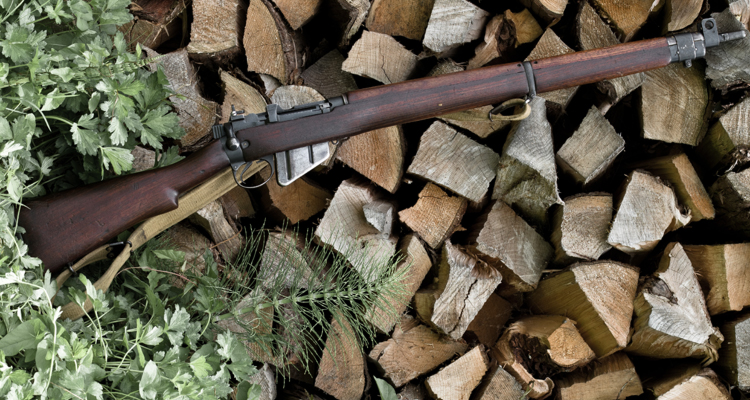
Being our own Commonwealth's contribution to the surplus rifle market, the Lee-Enfield is a rifle that almost needs no introduction. They've served with distinction in the Canadian Armed Forces for over a century, have bagged just about any kind of North American big game one can imagine, and if you're lucky can still be found at reasonable prices in this country.
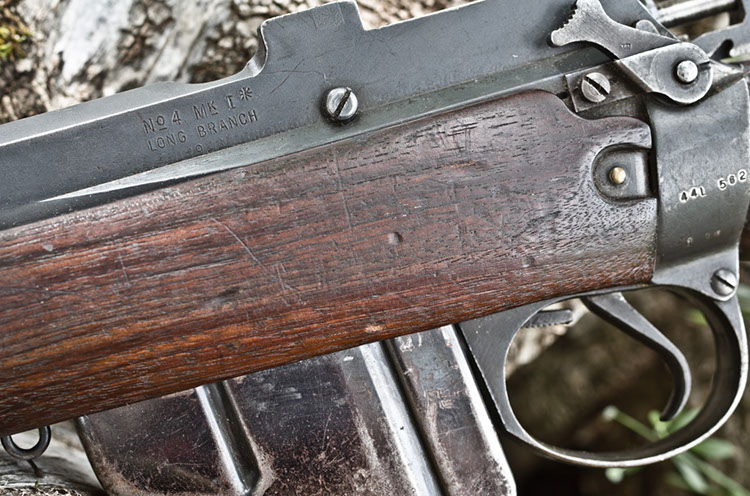 Another rifle designed in conjunction with the calibre it would eventually fire (.303 British), the Lee-Enfield earned a reputation on the battlefield for its capability to produce huge volumes of fire that were unmatched by anything this side of a machine gun. Endowed with a 10-round magazine and a wickedly fast action due to the bolt's rear locking lugs, 60-degree bolt rotation (as opposed to the 90-degree bolt rotation required by its contemporaries), and handy bolt handle location, the Lee-Enfield was the fastest-firing and highest-capacity rifle on the battlefield for eons, and served its owners well.
Now, although still in active military service with the Canadian Rangers, the Lee-Enfield can be found across the country without difficulty, occupying dozens of tables at gun shows and hundreds of used gun racks, undoubtedly. But it's not as easy as simply picking one up and walking away. First off, unsurprisingly, the Lee's long service record begot many different variations, although most buyers are likely to stumble across three popular versions: the No. 1, the No. 4, and the No. 5. Of these, the No. 1 is the oldest, having been the model that saw the Commonwealth countries through the First World War, and as such, most examples in any decent shape will have been long considered collector's items and will carry commensurate price tags.
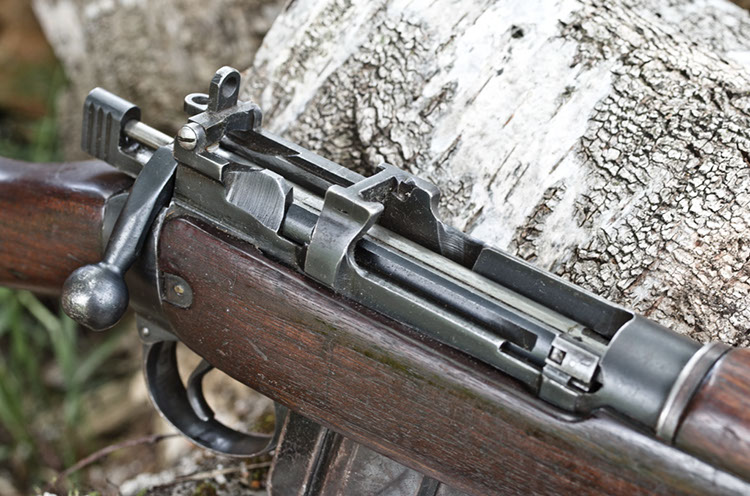 The No. 4, on the other hand, was a World War II-issued rifle and as such is much newer, meaning they typically command lower prices than do their older No. 1 brethren. But being both far more plentiful, and having undergone a period in which they could be bought for between $25 and $35 dollars, many No. 4s were reconfigured/butchered into "sporterized" rifles; a process that involved removing the majority of the furniture in an effort to turn the heavier full-stocked battle rifles into lighter, more hunting-friendly sporting rifles. And while these sporterized rifles are almost always the cheapest Lee-Enfields on the market, returning them to their previous glory can prove relatively expensive and time-consuming, so check out stock prices and fitment before buying!
The third and final Lee-Enfield one is liable to find is the No. 5 "Jungle Carbine." A shorter rifle that saw service in the Korean War and Malayan Emergency, the No. 5 provided Commonwealth troops with a shorter, nimbler package that traded accuracy for handiness, leading to the unofficial adoption of its moniker "Jungle Carbine." Interestingly, British forces complained that the No. 5 suffered from a "wandering zero" due to lightening cuts n the receiver structure (a fact that has since been frequently and quite soundly refuted), leading the British military to cease production of the Jungle Carbine after just three short years from 1944-1947, making it relatively uncommon and a possible future collectible.
The Mauser
 A good price to pay: $450
Calibre: Various
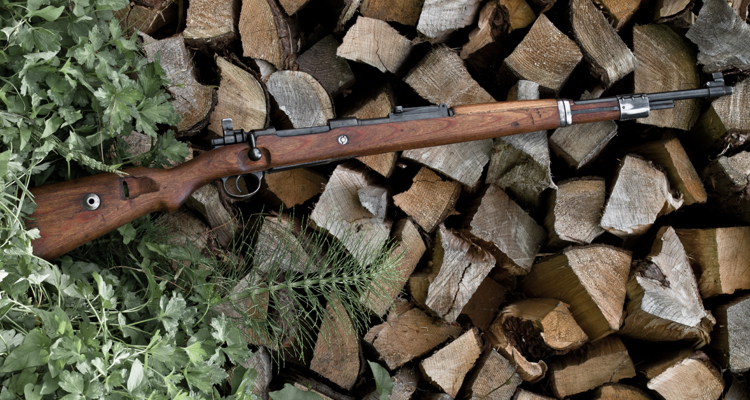
Perhaps considered to be the grand-daddy of all surplus rifles, nay, the grand-daddy of the modern bolt-action rifle, more could be written about Mauser rifles than we could ever hope to contain within this magazine's 48 pages, so for the purposes of this particular article we'll focus on a few of the most popular versions of the Mauser military rifle; the first being the instantly recognizable Karabiner 98 kurz (meaning "carbine 98 short), or Kar98k. A derivative of the Gewehr 98, or Gew. 98, that saw the German infantry through World War I, the Kar98k took that design and altered a few of its components while also significantly shortening the rifle overall. The resultant rifle performed in much the same manner as its longer Gew. 98 predecessor, and possessed the same five-round capacity, but had a more accessible turned-down bolt handle (which also allowed the bolt handle to clear optics mounted atop the receiver), weighed less, and could be built more cheaply. By the time production had ceased, well over 14 million Kar98ks had been produced. Of course, having been produced by a large number of German armouries for a large number of export markets, there is a massive amount of material available online as to which particular manufacturers produced the most accurate guns, as well as plenty of debate as to which manufacturers and years remain the most collectible.
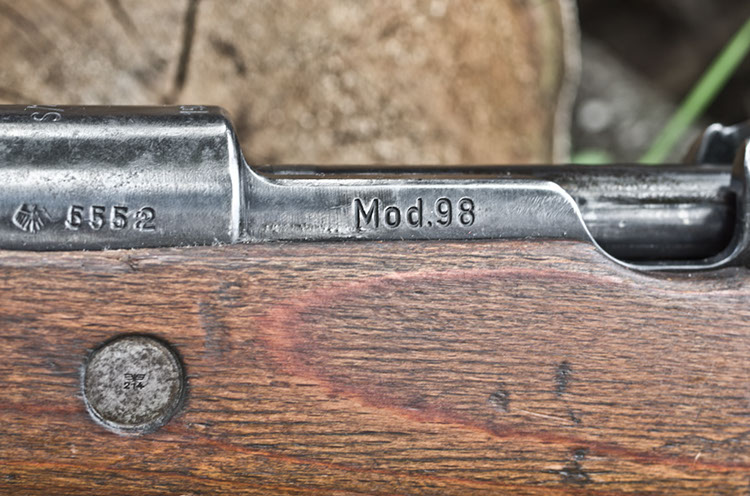 But if you want Mauser quality without necessarily paying the premium that typically accompanies German-made firearms, it's entirely possible to get an excellent-shooting rifle from any number of the licensed producers of the design; such as the Swedish, South American, or Yugoslavian Mausers. The Swedish and South American (Argentine and Chilean, usually) Mausers are typically considered amongst the most accurate; sometimes even matching the accuracy produced by the German manufactured rifles. Conversely, Yugoslavian M48s offer much of the same ownership experience at a typically lower cost, due simply to the large volumes that were produced. But although they may look quite similar, the Yugoslavian guns share little in terms of parts with the German Kar98k, and even differ in such basic dimensions as the length of the receiver. Conversely, Swedish Mausers share almost all of their parts with the German rifles, as they were produced both within Swedish under license, as well as within Germany, as Swedish production lines at Carl Gustaf's and Husqvarna were slow to start production due delays in shipping the production machinery from Germany to Sweden. Of these rifles, the m/1896 long rifle was the most common, with over half a million produced with many of those having been cut down by 5.5" in 1938 to follow the trend of equipping troops with more easily carried rifles. These rifles are known as m96/38s.
Being one of the most robust rifle designs ever made, and manufactured in some of the greatest arms manufacturing facilities of our time, it's hard to find fault with the Mauser. If it has one, surely it's merely that there are so many different variants, chambered in so many different calibres, that owning just one is a struggle in and of itself.
Enfield P14/M1917 enfield
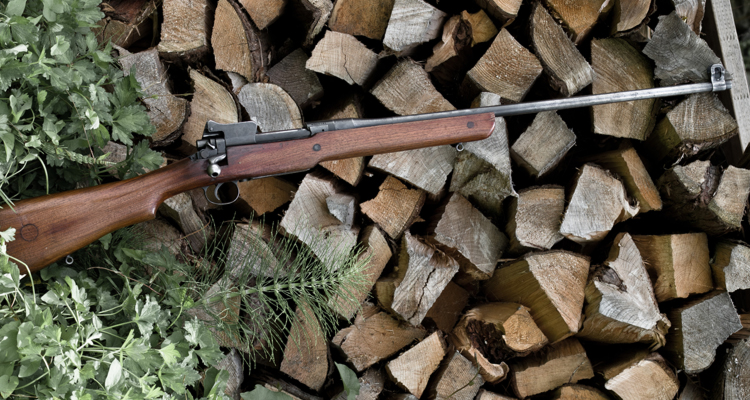 A good price to pay: $375
Calibre: .303 British
While the Lee-Enfield will always remain the most popular of British surplus guns, it wasn't the only gun made under the Enfield banner. Having faced the accurate and devastating fire of the Mauser 1893 and 1895 rifles in the Boer War, the British military set about essentially trying to replicate the performance of that rifle. To do so, they needed to create a new lightweight, high velocity round that could emulate the ballistics of the 7x57mm round fired by the Mausers, and a rifle to fire it. The round they devised was called the .276 Enfield, and the rifle was the Pattern 1913 Enfield, or P13. But obviously, shortly after the design of this rifle and round was complete, the First World War broke out and subsequently forced the British military to abandon the adoption of the new .276 Enfield round due to the massive logistical issues associated with the development and manufacturing of an entirely new round and rifle during wartime.
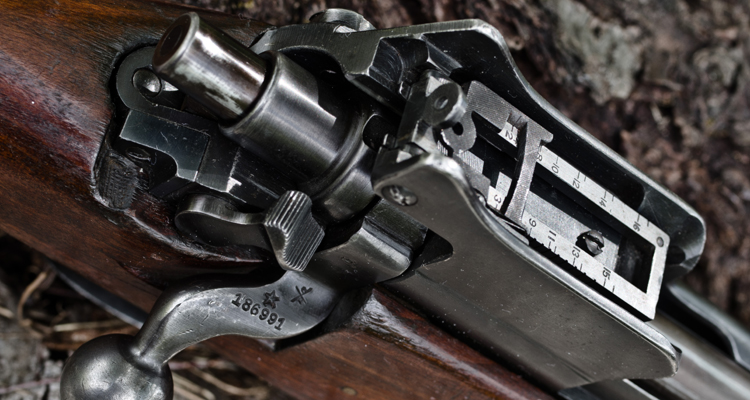 But while the adoption of a newly developed calibre may have been out of the question, the British government were unwilling to toss the proverbial baby out with the bathwater, and so went about converting the strong action of the P13 to fire the already well-experienced .303 British round. Not surprisingly, that task was dispatched in the course of one year, and the result was not surprisingly called the P14. Possessing a five-round magazine, and combining some of the Lee-Enfield's rapid-fire design decisions with the robustness and reliability of a Mauser action, the P14 emerged in many ways a better rifle than the Lee-Enfield it hoped to replace.
Sadly, even after investing in the creation of the newly aborted round and the conversion of a similarly new rifle to fire the more populous .303 British round, England's military procurement officers couldn't catch a break: Vickers, the primary contractor for P14 production, was relatively busy assembling machine guns at the time and was only capable of making a small number of P14s. Furthermore, while the P14 was more accurate than the Lee-Enfield, could be operated just as quickly, and was arguably more durable, its smaller 5-round magazine capacity made it less effective on World War I's battlefield than the Lee, which all combined to turn the P14 from a cutting edge battle rifle to an afterthought issued to snipers, reservists, and home guardsmen.
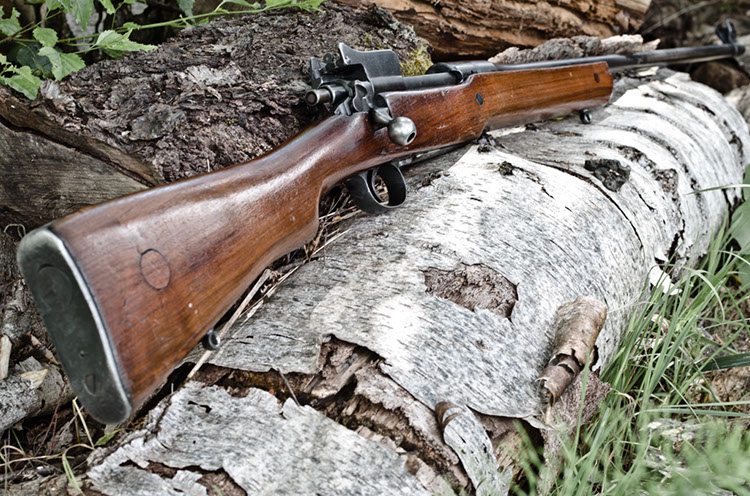 Except America had no such qualms with manufacturing capacity. Having been contracted by the British government to supply additional P14s prior to the American's involvement in the way, Winchester, Remington, and a subsidiary thereof known as Eddystone (set up specifically to build P14s) helped bolster the number of P14s in circulation until 1917, when American troops waded into the European conflict armed with a mixture of 1903 Springfields and an Americanized, 30-60-firing version of the P14 known as the M1917 Enfield. These M1917s, built by those same three American firms, would eventually surpass the venerable Springfield as the most popular rifle in the American military, and would almost double the British P14 production figures, with nearly 2.2 million made compared to just 1.2 million P14s.
The M1903 Springfield
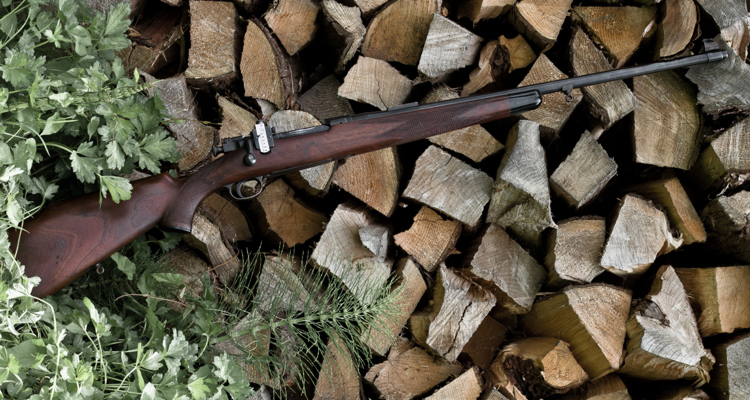 A good price to pay: $1000
Calibre: .30-06 Springfield
Probably the most expensive surplus rifle you're liable to find in Canada without surpassing our own self-imposed $1,000 limitation, the M1903 Springfield's typically higher price tag has grown out of a paternal love affair between it and the American people it served. Issued to US troops in both world wars and Korea, it continued in a small role as one of the designated sniper rifles in the Vietnam war, after which it was retired. Interestingly however, due to the rifle's impeccable balance, it remains the rifle of choice for numerous American rifle drill teams.
The creation of the Springfield grew, like so many other now-surplus rifles, out of an American need to match the firepower of the revolutionary Mauser rifle. Having matched up against German-made Mausers during the Spanish-American War, American troops' unique Norwegian Krag-Jørgensen rifles proved wholly incapable of matching the performance of the faster-loading and flatter-shooting Mausers, due to the Krag's combination of a hopper-style magazine and lacklustre .30-40 Krag ammunition. In fact, the Krag was so outclassed that at the famous battle of San Juan Hill just 760 Spanish regulars armed with Mausers held off 15,000 American infantrymen until the arrival of four US Gatling guns allowed Roosevelt and his Rough Riders to take the Spanish position.
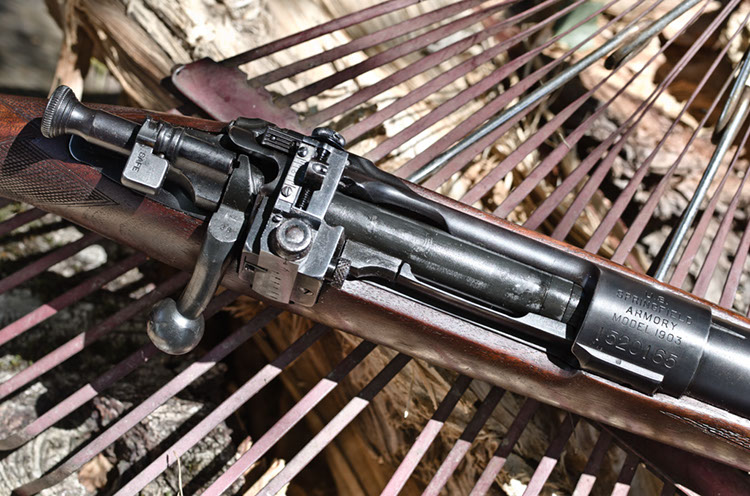 But unlike many of the rifles that saw their creation grow out of a desire to remain competitive with the German rifle, the American Springfield was the only one that truly copied the Mauser's design, altering little beyond the chambering. In fact, the Springfield was such a direct copy of the German rifle that the Mauser's patent holder, Mauser Werke, actually filed a lawsuit against the US government and was awarded damages that totalled the equivalent of over $3,000,000 in today's dollars. Even the ammunition the first M1903 fired; a round-nosed round known as .30-03, was traded out in 1906 in favour of the now iconic .30-06 round... with the biggest difference between the two being the .30-06's 150-grain spitzer bullet design that was also cribbed from a German's design!
So why does this American Mauser command such higher prices? In short, scarcity. Having been employed in relatively small numbers, the volume of M1903's available during World War I was such that it had to be augmented by the adoption of the P17 mentioned elsewhere in this article. Then, when World War II came around, the Springfield again saw itself playing second fiddle to the indomitable (but now expensive) M1 Garand. But none of that dissuaded surplus rifle collectors and historical buffs from snapping the relatively well-made and accurate rifles up en masse when they were cheaply offered through programs like the US' Civilian Marksmanship Program. As such, few are still available in unmolested form, leading to higher prices. This, combined with the Springfield's cheaper production value compared to many Mausers (most M1903's utilize more stamped components and 2-groove barrels made from lower-grade "war emergency steel"), makes many of them more appropriate as a highly collectible occasional shooter rather than as an affordable everyday rifle.

 SUBSCRIBE TO CALIBRE MAGAZINE
$30.00 / year
SUBSCRIBE TO CALIBRE MAGAZINE
$30.00 / year
 UNAPOLOGETICALLY CANADIAN MEN'S T-SHIRT
$29.00
UNAPOLOGETICALLY CANADIAN MEN'S T-SHIRT
$29.00
 UNAPOLOGETICALLY CANADIAN WOMEN'S T-SHIRT
$29.00
UNAPOLOGETICALLY CANADIAN WOMEN'S T-SHIRT
$29.00