Kel-Tec RDB: The best bullpup in Canada?
I am not a bullpup guy. Two reason for that: First off, I've spent a pretty reasonable amount of time shooting guns where reloading involved inserting a magazine into a hole in front of the trigger, and secondly, I'm left handed. And in case you blessedly unaware righties haven't noticed, most bullpups involve a bolt whizzing back and forth past the meat of your cheek. If there happens to be an ejection port there... well, it's not a ton of fun. I'm looking at you, Norinco Type 97.
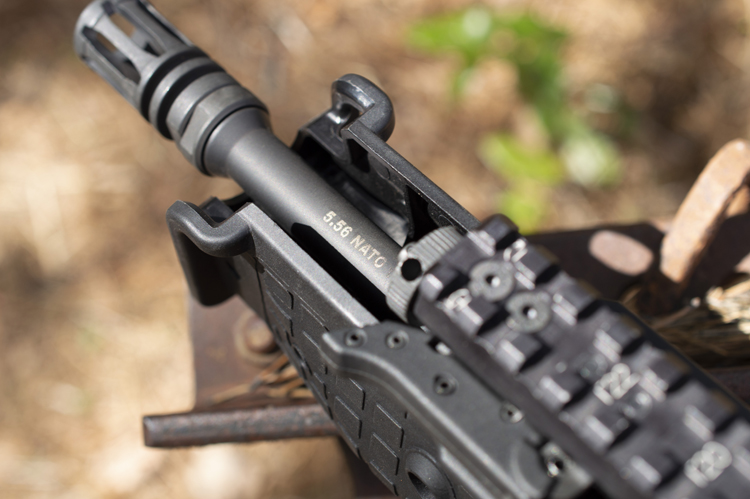 But there have been some exceptions to the rule. Obviously the Tavor springs to mind, with its ability to switch from right- to left-handed operation with the correct parts, but a left-handed Tavor will set you back somewhere north of $2,500... if you can lay hands on the relatively rare left-handed bolts. And then of course there's the Kel-Tec RFB. Like the now defunct FN FS2000, the RFB throws its spent cases forward out of a small chute, meaning the receiver is enclosed on both sides. But the RFB shoots .308 Winchester at a dollar per bang, and the FS2000 is perhaps the ugliest gun ever conceived by mankind. And again, the RFB is no cheaper than a Tavor, and the FS2000 is still, for some ungodly reason that should defy anyone with a working pair of eyes, even more expensive.
But now there's this: The Kel-Tec RDB. A non-restricted, fully ambidextrous, downward-ejecting bullpup chambered in 5.56 that's set to hit the market for around $1,500.
What the Kel-Tec RDB is
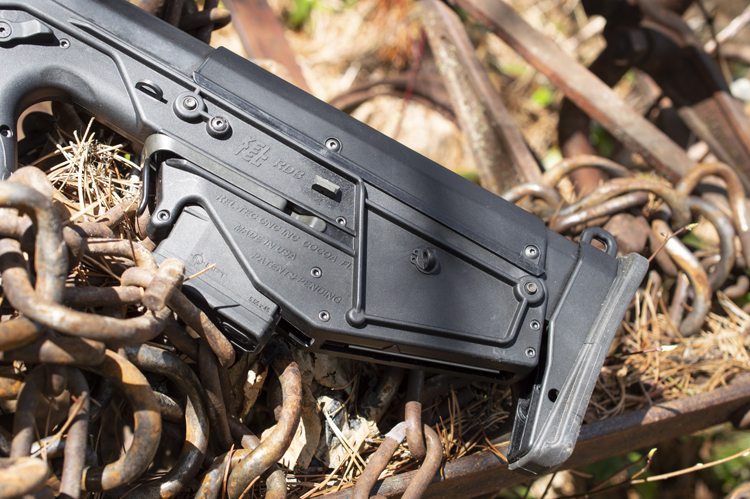 In Kel-Tec's own (seemingly Canadian Forces inspired) nomenclature, the RDB is a "Rifle, Downward-Ejecting, Bullpup." Sort of like how CF socks are "Socks, Wool, Grey, Itchy" and underwear is "Underwear, Green, Always Too Hot." Or something like that.
Anyway, it is literally that simple; it's a bullpup rifle that dispenses its spent casings through an ejection port behind the magazine well, on the bottom of the gun.
Obviously doing this involves a bolt that travels a bit farther than the average rifle's, as the bolt needs to traverse the entire distance of the magazine well, and then at least a case-length's span beyond that in order to eject the spent casing through the ejection port. To do this, the Kel-Tec RDB relies on an adjustable short-stroke gas-piston system that utilizes a combined gas piston/bolt carrier/op-rod/op-rod guide that houses a sort-of-AR-15ish rotating bolt, albeit with the rounded lugs that are becoming so en vogue and dual plunger-style ejectors.
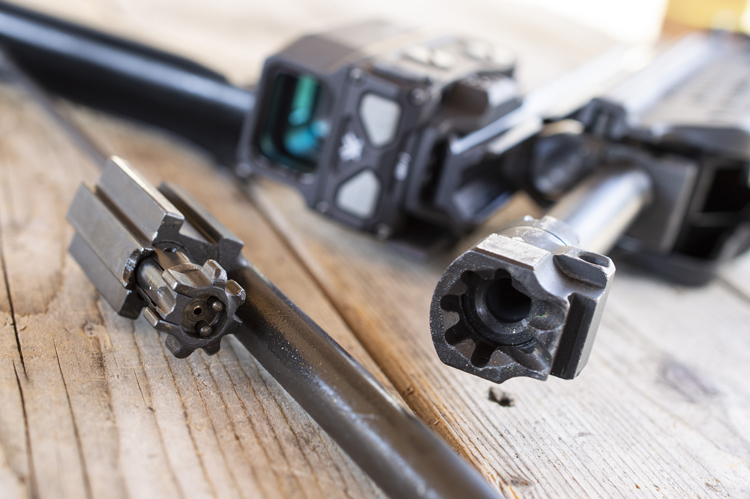 Those ejectors are mounted at the 12 o'clock position, directly opposite a very healthy extractor that works to keep the spent casing on the bolt face until it reaches the rear of its travel, where the dual ejectors throw the spent casing down the ejection port. And in case you were wondering, the rifle doesn't rely on gravity whatsoever; the ejectors are forceful enough to eject rounds upwards with the rifle held upside-down.
Why the Kel-Tec RDB awesome
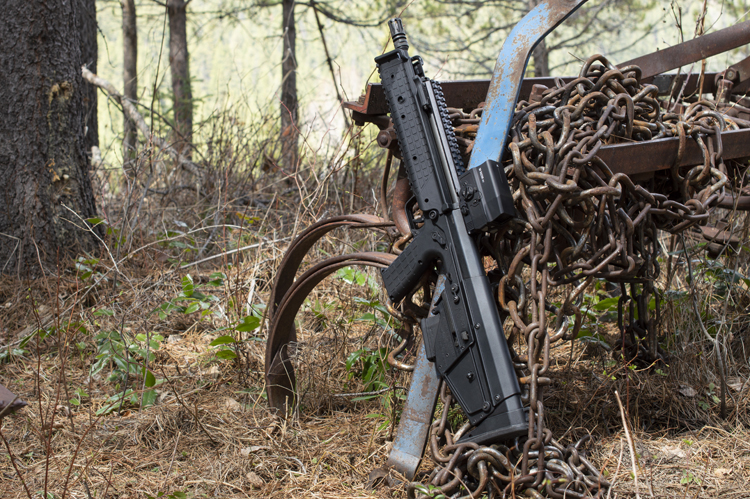 This means the RDB is fully ambidextrous, and that's a claim shared only by those aforementioned forward-ejecting exotics. Now before you Tavor owners/enthusiasts/fanatics out there take to your keyboards to tell us to stop making such spurious comments about the Hebrew Hammer, let me explain: Fitting a Tavor with a left-handed conversion kit does not make it ambidextrous. It makes it left-handed. A right-handed person cannot shoot a left-handed Tavor with any more ease or grace than a left-handed person can shoot a right-handed Tavor.
The Kel-Tec RDB is different. Since it ejects downward, the rifle can be shot by both lefties and righties alike. The magazine release is central, so it too doesn't discriminate, and both the 45-degree safety and simple bolt release are present on both sides of the rifle. The only thing that needs to be adapted is the charging handle, which is simply pulled out of the rifle and inserted on the other side.
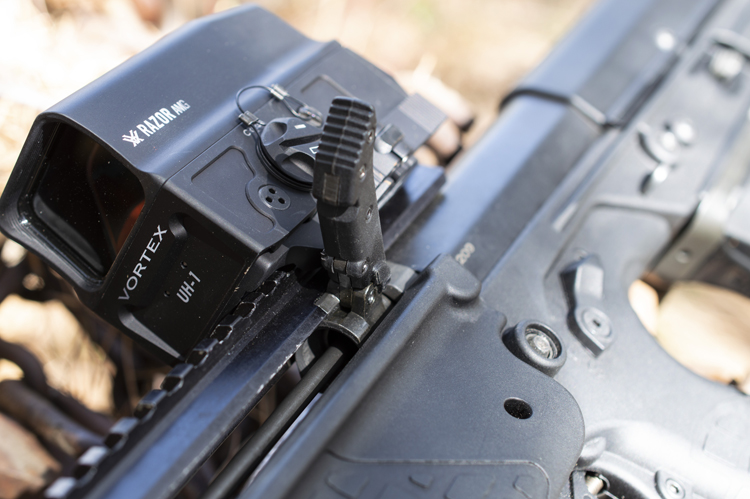 And all those things work extremely well. The safety is precisely where your thumb goes, the magazine release operates easily, and the non-reciprocating charging handle is easy to use and sprung to fold flat when not in use. It even features a retention notch, so if you don't want to operate the bolt hold-open (which can be difficult given the gun's format and layout) you can just pull the handle rearward and lift up. Given how hard it can be to insert a fully loaded mag on a closed bolt, we found ourselves using that notch a lot when first loading the gun, and then charging it with a satisfying H&K MP5-style slap to the charging handle. Of course during firing strings, the bolt locks open on the empty mag so reloads are done using the bolt release, which falls directly under the thumb when inserting a fresh mag. Very handy.
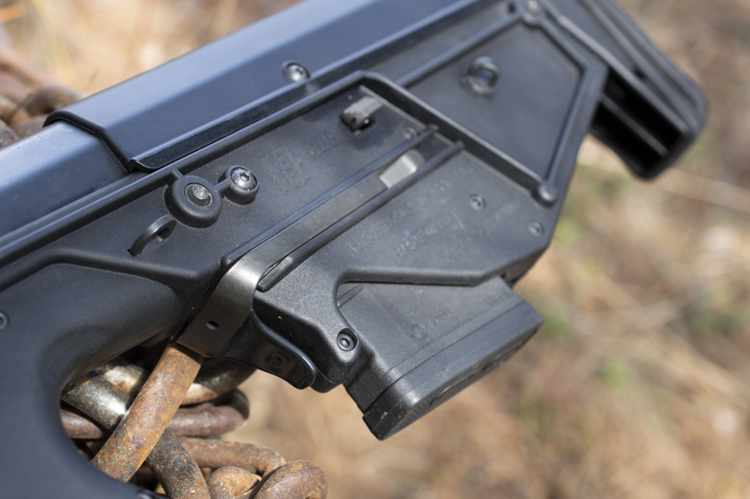 And magazine release, always a point of contention on bullpup rifles, is like the Tavor's in that you can either bump it with your trigger hand or grab it as you strip a mag out of the rifle. And yes, like damned near everything that shoots from a STANAG mag, the magazines do drop free. Using a 30/5 round USGI magazine provides quite a nice quasi-monopod effect when shooting from the prone position, too, as the bottom of the magazine is basically directly opposite your cheek weld.
Rounding out the RDB's exterior features are a myriad of sling attachment points; two MASH hook points on each side, two molded in loops on the front of the handguard, and one molded loop on the back.
The Kel-Tec RDB's Construction
As with all bullpups, the small explosion that propels the bullet downrange happens right under your face, so it's somewhat more important that such a gun be built from quality materials to assuage any concerns that an untoward kaboom moment might turn you into Two Face of Batman fame. In the case of the Kel-Tec RDB, that comfort comes from a 1.5 millimetre thick (just shy of 1/16th inches) piece of sheetmetal bent into a u-shape, which forms the upper receiver. Inside this u-shape piece, two reinforcing strips are installed on either side, and serve as guide rails for the abbreviated bolt carrier (while also providing purchase for the screws holding the cheekrest onto the receiver's exterior). The rear of the receiver is given additional rigidity via a small piece that's welded along the bottom the receiver to form a box. Inside the box, a small stud is installed to locate the end of the operating rod, and a nylon buffer is fitted.
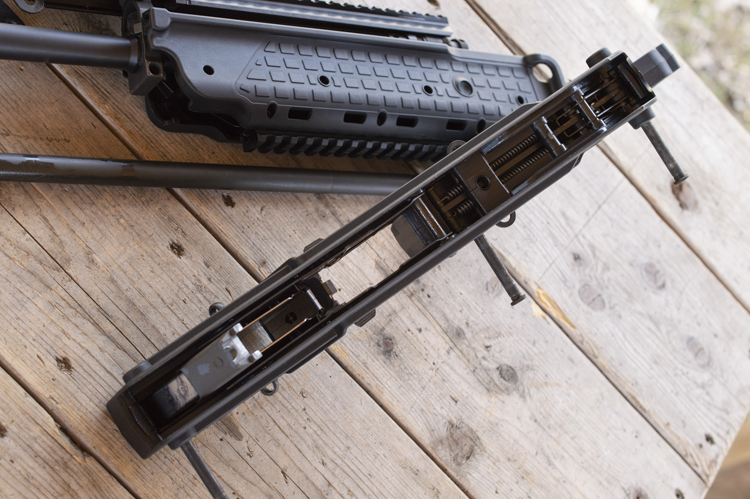 The lower, tasked with nothing more than holding the magazine, ejection port, and trigger assembly, is more familiar Kel-Tec technology; being made of two clamshell polymer moldings screwed together. Inside, the areas surrounding the magazine well, ejection port, and hammer are all reinforced with a web of stamped steel the same gauge as the upper receiver. This is primarily to support the trigger operation... but more on that later. The lower also houses the two or three take-down pins that must be removed to strip the gun. We say two or three because removing all three will break the gun down to its component parts completely, while removing the front two will allow the upper and lower to hinge apart, allowing the bolt to be extracted. The pin through the handguard only serves to retain the handguard.
Finally, we come to the last components: The bolt and barrel. On the model pictured, which is the commercial US model imported and sent to the RCMP for examination, the barrel is 17.4 inches long. On Canadian non-restricted models, the barrel will be 20 inches long, and will feature a 1 in 7 twist rate (this early production sample is 1:9). For the truly geeky, the barrels are AISI 4140 steel, have six grooves in the rifling that twist to the right, and have a corrosion-preventing salt bath nitride treatment internally.
More interesting is the way the barrels are assembled. They use an AR-15 style barrel extension that's threaded onto the breech, and then locked in place by a lock nut, allowing headspace to be set in much the same way as it is set on a Savage bolt action rifle. This allows for manufacturing tolerances to be compensated for while still obtaining appropriate headspacing. Conversely, AR-15s are more like Remington 700s, where precisely made barrel extensions are threaded onto precisely machined barrel tenons and tightened up against a shoulder machined onto the barrel profile. Also, due to the inability to thread the full length of an AR-15 barrel tenon right up the shoulder, a rebated area between the threaded portion and the shoulder creates a weak point in all AR-15 barrels where the chamber wall is both thinner and unsupported by the barrel extension. This isn't so on the Kel-Tec RDB barrel, as it is threaded beyond the extension and lock nut, meaning there is no rebated, thinner portion and the lock nut and barrel extension can completely support almost the entire chamber. In short, this is very strong gun.
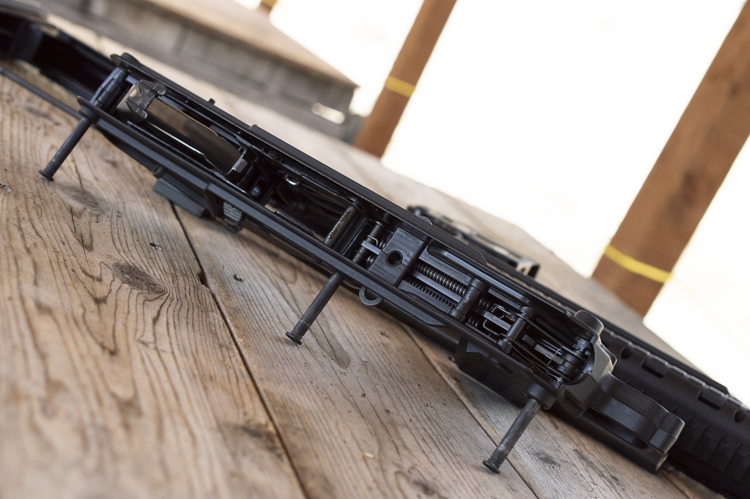 Even more interesting still is that throwing a micrometer on what threaded portion of the breech tenon we can (most of its threaded length being inside the barrel extension and locknut) would seem to indicate that it's 13/16" in diameter, making it the same diameter as an AR-15 barrel tenon, meaning it is likely the same thread pitch as well. However, due to the locknut method of retention, the threaded portion of the barrel is substantially longer than an AR-15 tenon, at roughly one inch long (an AR-15's tenon is precisely 0.62" inches long before reaching the shoulder that the extension is tightened against). This, combined with what appears to be a gas port drilled (near as we can tell without removing the gas block) the same distance from the breech as you'd find on a rifle-length AR-15 barrel, would seem to indicate that the Kel-Tec RDB barrel is little more than a rifle-length AR-15 barrel with a fancy profile to support the gas block and sight rail/pin attachment points.
The bolt was clearly made with similar logic. Borrowing from the AR-15's bolt head obviously saves engineering time, but Kel-Tec has rounded the lugs; a feature many high-end AR-15 manufacturers are adopting to increase reliability. It operates on a cam pin that forces the bolt to rotate inside the carrier as the carrier is pushed fore and aft, and the cam pin is retained by the firing pin. If any of that sounds familiar, it should: It's basically the exact same principle as the AR-15's bolt operation. The only substantive differences are that there's a small spring between the bolt body and firing pin (serving to keep the firing pin to the rear during operation), and that the carrier is just an inch and a half long and suspended from an operating rod. Due to the bolt needing to traverse such a distance to eject a spent round, the shorter the bolt assembly, the shorter the receiver can be. The operating rod, by the way, also forms the gas piston and cycles fore and aft on a captive guide rod that lives inside it. The recoil spring driving the gun's operation is also captive, inside the operating rod.
Shooting Impressions
With most bullpups, the problem with them is twofold: The manual of arms is weird and the triggers are varying degrees of "remind me again why this is a better platform than a conventional gun." Generally, it seems like the farther a trigger is from the thing it's triggering, the worse it feels.
Not so with the Kel-Tec RDB. Truth be told, were we to close our eyes, the RDB trigger would be nearly indistinguishable from the well broken-in GI trigger in our Colt Canada rifles. Nearly. The break is uber-crisp, right around 4.5 pounds, and very consistent. There's no weird flexy-feeling hitchiness in it, nor any grit to be found; you pull back and after enough pressure is exerted, it just breaks. But, there's more overtravel than an AR-15's (not that it's excessive, just different), and the reset is both farther away and a lot less pronounced. There's none of the AR's nice tactile reset that you feel in the trigger, and even the faint audible snap the sear makes is noticeably far away, literally. It's like five inches from your ear and you'll never hear it with ear protection on. But, with that one caveat, it's fantastic.
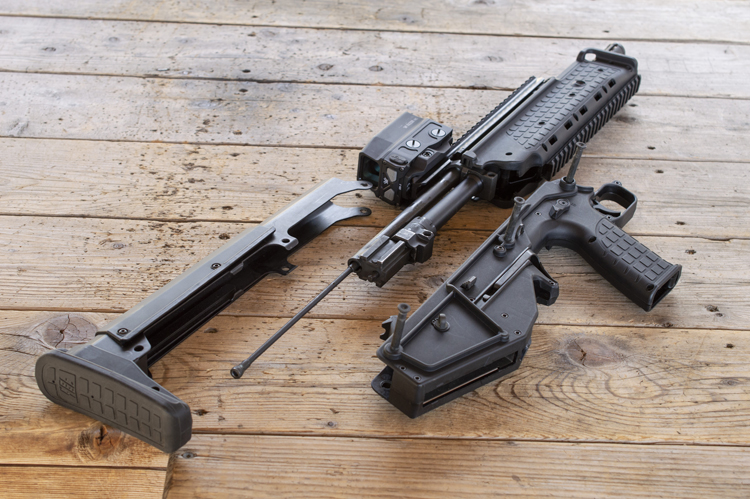 And that's because Kel-Tec put a lot of thought into it. The trigger's important bits, the ones that contribute to feel, are packed right into the space above the trigger in a steel cage that completely encloses all the relevant components. When squeezed, the trigger releases the sear, which in turn releases a massive action bar that is pulled forward by dual parallel hammer springs housed above the pistol grip. This action bar splits ahead of the magazine well, runs down either side of the receiver, and intersects the hammer. As these action bars are pulled forward, they pull the massive (and weird) hammer forward, which pivots from somewhere near the bottom of the receiver and traverses damn near two and a half inches before it meets the firing pin at the back of the bolt carrier. It's very strange, but everything is contained within a steel substructure, and is obviously kept very rigid. It works and it works well.
In terms of operation, we did have some trouble with the Kel-Tec RDB that we initially and incorrectly thought was the result of certain magazines not feeding correctly. As it turns out, the issue lie with the gun's almost infinitely variable gas regulator. As delivered from the RCMP evaluation lab, the gas pressures were turned up as high as possible, leading to an issue with double feeds or rounds simply being driven into the breech face rather than the trigger. It reminded us of the issue we initially had with the Type 97, which was also caused by the regulator being turned up too high, so we simply adjusted the RDB's gas system until it worked. But, we should note that owners would be well served to find a magazine they like and stick to that one type, as doing so will really let you dial the gas system in. Gen 3 Pmags were the most widely reliably (they worked across the most gas settings), but Lancer mags let us turn the gas down the lowest for the softest recoil.
And boy, was it soft. Even with Pmags or USGI mags and the gas system turned up slightly, the RDB is a pussycat. Is it softer than an AR? Well, that's really difficult to say. We would lean towards "probably," if only because it did feel a bit softer and logically, all that extra bolt travel is just giving the gun a better chance to bleed off energy that'd otherwise be introduced to your shoulder. Fitted with some sort of compensator or brake, this thing would be absolutely hilarious in CQB matches; already comes back on target quickly and points like we wish our dog would and that's with an A2 birdcage on the end.
In terms of accuracy, this one is what we'd call rack grade with most of the bulk ammo we shoot most of the time, but we'd like to see what it could do with some 77-grain pills... especially with the commercial 1:7 twist barrels that consumer models will come with. However, due to the way the barrel is pinned to both the sight rail and chassis, it's quite the opposite of free floated so that may prove the limiting factor on the Kel-Tec RDB's accuracy. But if it'll shoot into two inches with generic 55- or 62-grain ammo? Well, that's what we expect from most service rifles (including those aforementioned far more expensive bullpups, so this doesn't disappoint.
Conclusion
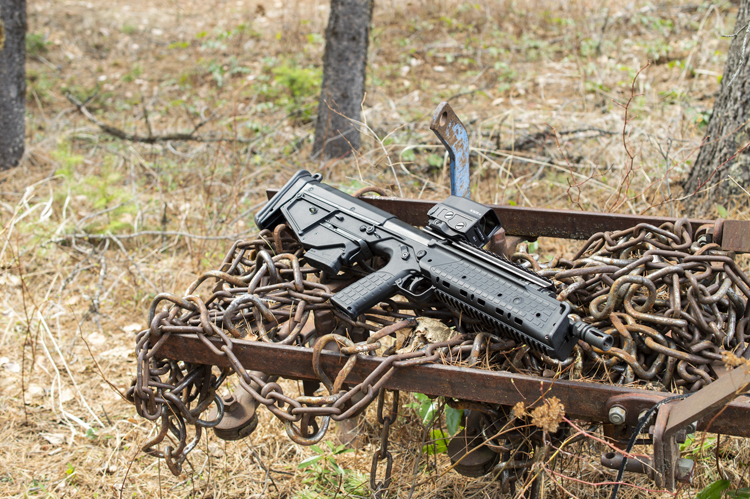 And that brings us to the big question: The price. After all, a $3,000 rifle that shoots into two inches with bulk M855 ammo isn't as impressive as, say, one that accomplishes that same feat for $1,400. Which is precisely what the Kel-Tec RDB is. With pre-sale prices hovering right around that mark, the RDB is roughly twice as expensive as the cheapest centerfire bullpup rifle on the market (the Norinco Type 97), and roughly half the price of probably its closest competitor, the Tavor X95. And in terms of shooting performance, quality, intelligence of design, and overall "goodness," the Kel-Tec RDB punches well above its price point. It's definitely far closer to the Tavor end of the spectrum than the Type 97 end of the spectrum, and even if you ignore the bullpup format completely, at $1,400 the RDB represents a pretty damned good deal for a non-restricted, STANAG-fed black rifle of any shape.
 But, at the same time, as technology marches forward we have found ourselves beset by ever-better jacks of all trades. The cell phone in your pocket evolved from a touch-tone monstrosity barely better than the handheld radios it replaced into a device that can send and receive email, take better photos than most cameras did a few years ago, and has more computing power than the Apollo spacecraft that put man on the moon... with no compromise to your cell phone's ability to serve as a telephone (even if you never use it as one any more). Which brings us to the Bergara B-14 Hunting and Match Rifle, or HMR.
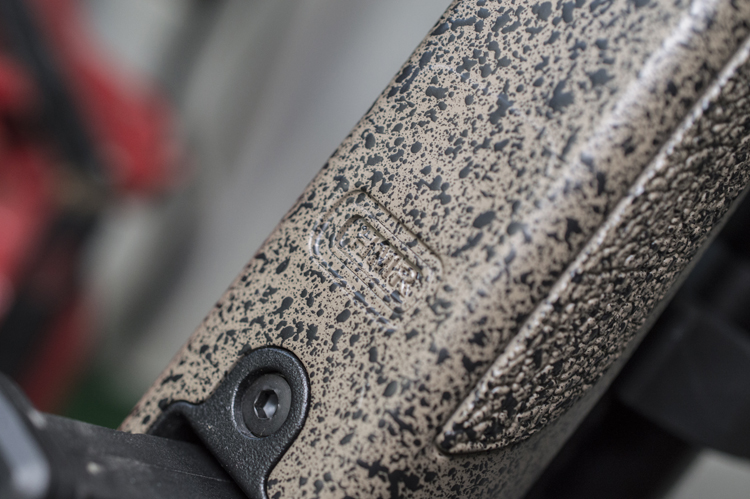 The formula is, if we're honest, achingly familiar: Take a precision rifle, reduce the barrel length to reduce weight, retain the detachable box magazine feeding system, and fit a stock that provides field-friendly simplicity with a modicum of adjustability. This is not a new idea. But due to two (or three, depending on how you look at it) reasons, where past efforts have fallen short of the mark, the Bergara B-14 HMR doesn't.
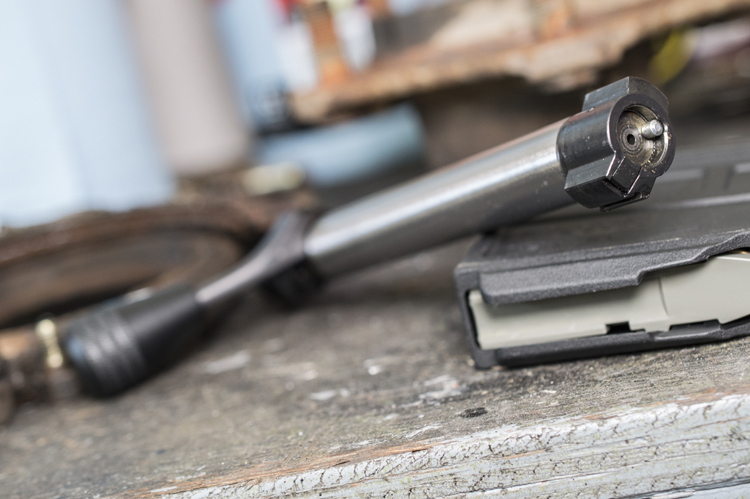
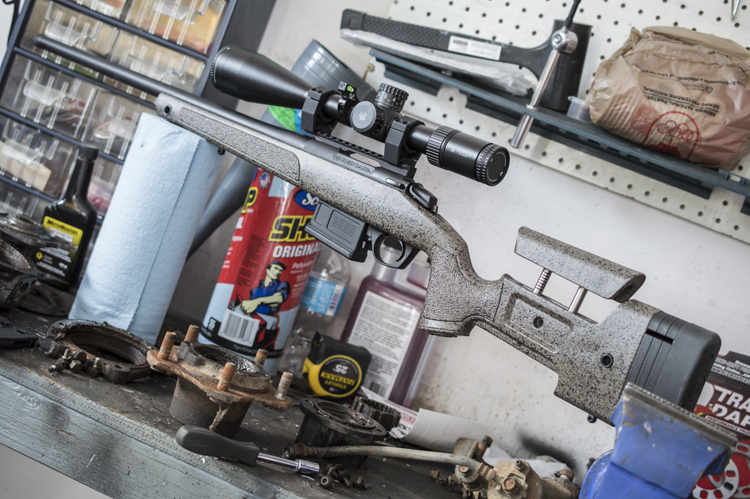 First, they took the conventional Remington 700 bolt and replaced the spring-steel, collar-style extractor with a huge Sako-style sliding extractor, the likes of which is actually even larger than the extractor you'd find in most custom Sako guns. The extractor on our 6.5 Creedmoor HMR measured right around 0.185 inches wide. Most popular custom extractors for fitting to a similarly chambered rifle come in around 0.177 inches. That translates into a better grip on the chambered round, and more reliable extraction.
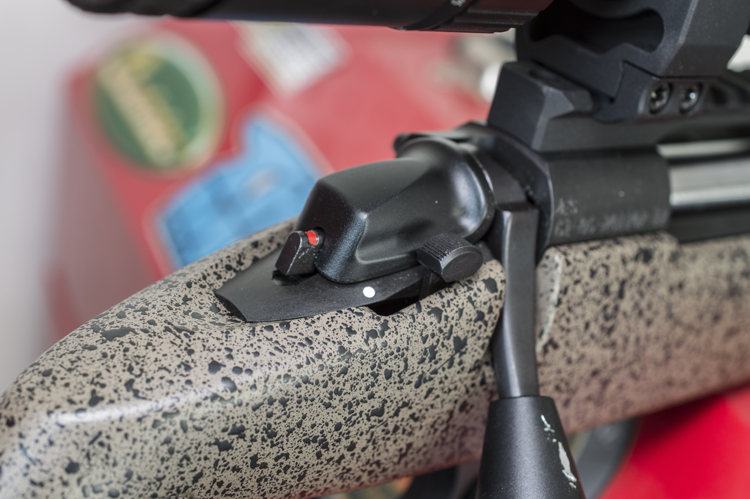 But otherwise, the action is actually pretty basic, and very Remington 700-esque. In fact, Bergara is quite proud of the fact that their action will fit in, on and with nearly all Remington 700 stocks, triggers and accessories. As we wrote a few months ago in our review of the B-14 Timber (which features the exact same action), while the key improvements certainly are welcome, the biggest actual impact is in the general attention-to-detail that's evident in the B-14 action. Simply put, a stock B-14 action feels a lot like a worked-over Remington 700 action; it's that smooth and free of play.
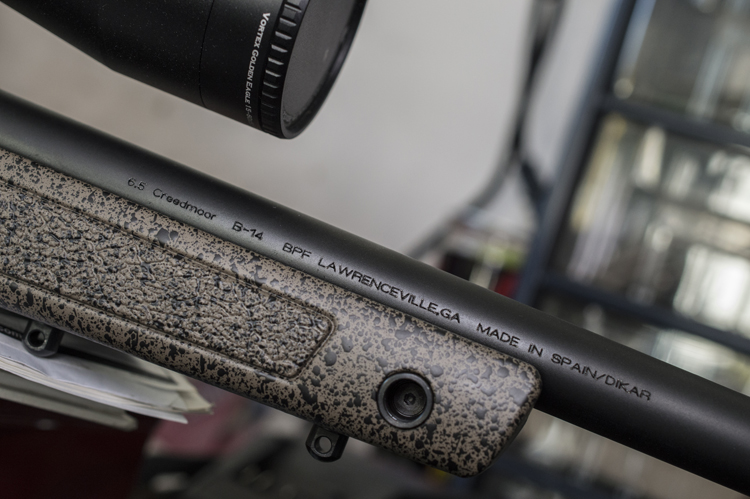 Now, we could spend every available inch of page space discussing the specifics of Bergara's barrel production, but we won't. Instead we'll simply say this: When they first started making centerfire barrels, it was with none other than Ed Shilen showing them how. They purchase their raw stock from a steel manufacturer by the name of Olarra that's regarded as one of the best steel firms in Europe... and who is coincidentally located in the Basque region of Spain, alongside Bergara. The barrel blanks are straightened, and then drilled, before being treated to a three-step vertical honing/polishing process. This process brings the bore within 2 microns of being perfectly straight (a human hair is 60 microns) and gives it a mirror finish. Then the barrel is button-rifled, using a proprietary cutting lubricant, and heat-treated. Finally, they're cut, crowned, and finished. The result is a barrel that comes with a sub-MOA guarantee and that, in our experience, is capable of shooting into half that.
 Now, while the B-14 HMR in 308 is an undoubtedly effective rifle (no one needs to be reminded of the flexibility of the 308 Winchester round), it's the 6.5mm Creedmoor chambering that really elevates this rifle's capability. 6.5mm projectiles boast some of the best sectional densities and coefficients of drag out there. In fact, many 6.5mm Creedmoor loads actually manage to replicate the trajectory of the venerable 300 Winchester Magnum load, albeit without the punishing recoil that round often delivers. Furthermore, due to the sectional density imbued by the 6.5mm's long bullets, it's proving as effective at taking much of North America's game as it is at banging gongs at 1,000 yards. So, for a rifle that's billing itself as both a hunting and match rifle, this really is the round to shoot.
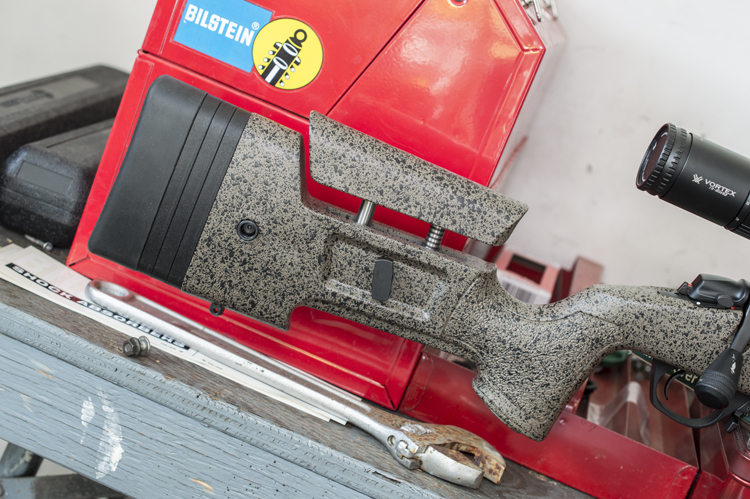 Otherwise, the stock features a heavily inletted barrel channel that leaves no doubt about the barrel's free-floated nature, as well as an internal aluminum "mini-chassis" that's built into the stock. This provides consistent bedding, as the chassis features machined cradles to hold the action, which essentially replicates both stock pillars and conventional epoxy bedding. Furthermore, since the mini-chassis also features an integral recoil lug pocket, the recoil forces are spread throughout the stock, keeping everything in the same place.
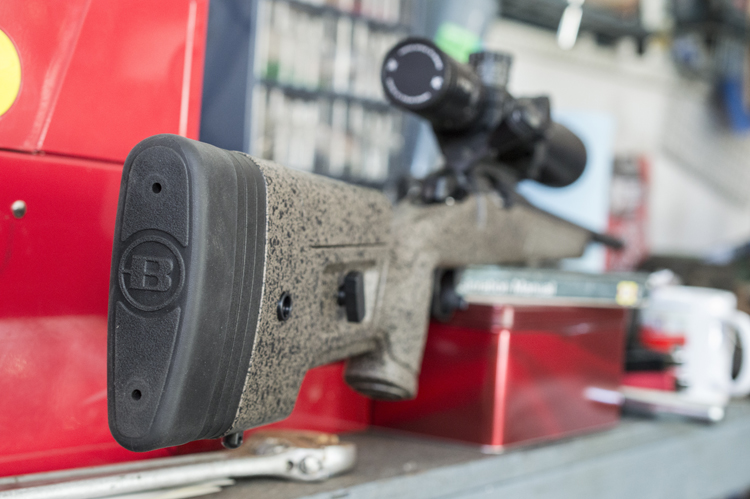 As with the Bergara B-14 Timber we tested last year, settling in behind the B-14 HMR was an experience dominated by one thing and one thing only: Accuracy. To be totally blunt, shooting the HMR feels very "conventional," largely due to the familiar feel of the Bergara action. With the ever-increasing number of three-lugged actions on the market, bolted into feature-festooned chassis systems, the simplicity of the B-14 HMR's action and design makes for a very transparent shooting experience in which the rifle plays a lot less of a role in dictating "how it shoots" than the performance it puts up. In other words, you're not always aware of 14 different stock adjustments you could make, nor are you reminded of how cutting-edge the action is every time you open it.
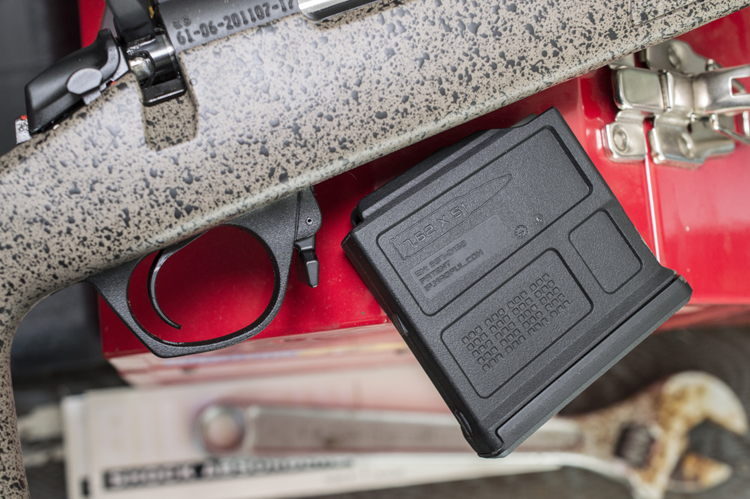
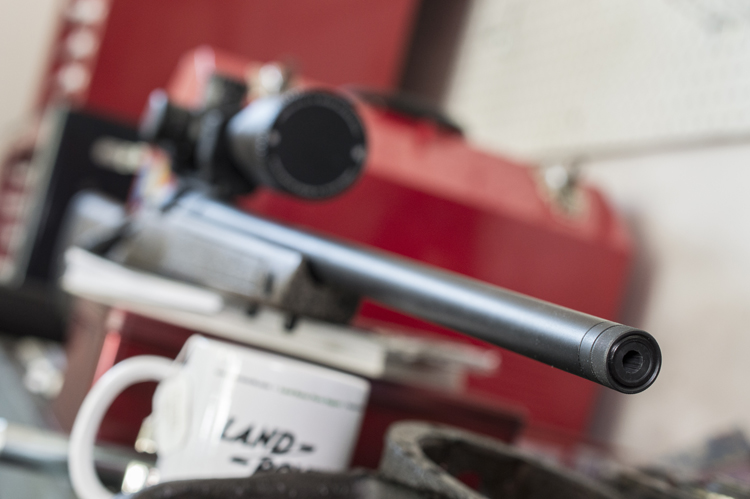 Off the bench, and in the field, the HMR handles well but is a bit heavy. Bare, our rifle came in a hair over nine pounds, so with the average hunting optic and scope mounts installed you're looking at a 10.5 to 11 pound rifle. That's a bit hefty, compared to a similarly outfitted dedicated hunting rifle such as the B-14 Timber, which comes in closer to 9 pounds once fitted with glass. However, the stock carried well, and it didn't have too many protuberances to snag either the brush or our clothing. We would, however, trade the 5-round AICS-style Magpul Pmag for a 3-round flush-fitting magazine for hunting season, just to trim the lines up a bit.
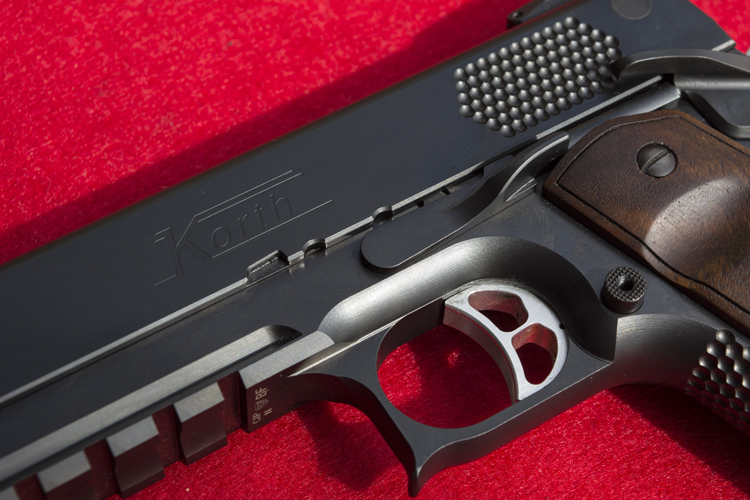 But this is not a 1911 at all. There is no Browning tilt-barrel short recoil system here; the very operating system named for the 1911’s designer has been replaced, and that most American of designs has been replaced with the most German possible alternative: roller-delayed blowback. Are you ready to step through the teutonic looking glass?
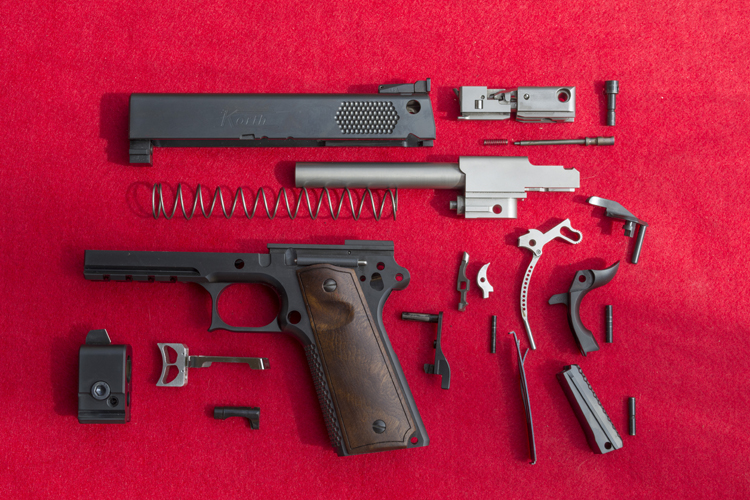 A brief explanation of each recoil system is perhaps warranted here. The Browning design in the 1911 uses the rearward impulse of the gun's discharge to drive both barrel and slide back together, but the barrel very quickly engages the link and rotates downwards, tilting away from the slide and disengaging the barrel lugs from the slide lugs, allowing the slide to continue its rearward travel far enough to open the ejection port fully, toss out the spent brass, and pick up a new bullet from the magazine. The slide drives the cartridge forward, and close to the end of the forward travel the slide contacts the barrel and drives it forward, re-engaging the lugs as the barrel tilts back to horizontal.
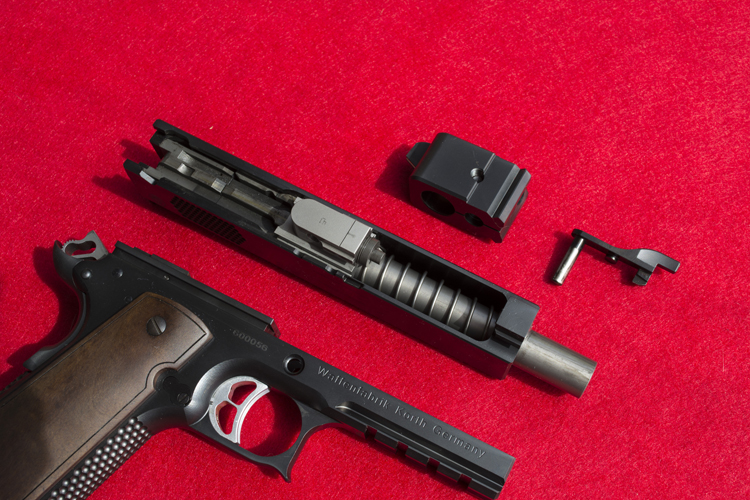 The downsides are also fairly notable. Most importantly, perhaps, is that while there aren’t a lot of moving parts, the parts that are moving are really important ones, like the barrel. Imagine if your favourite rifle had a barrel that had to flop around loosely, independent of the receiver, between each shot. How do you feel about the impact that’s going to have on accuracy?
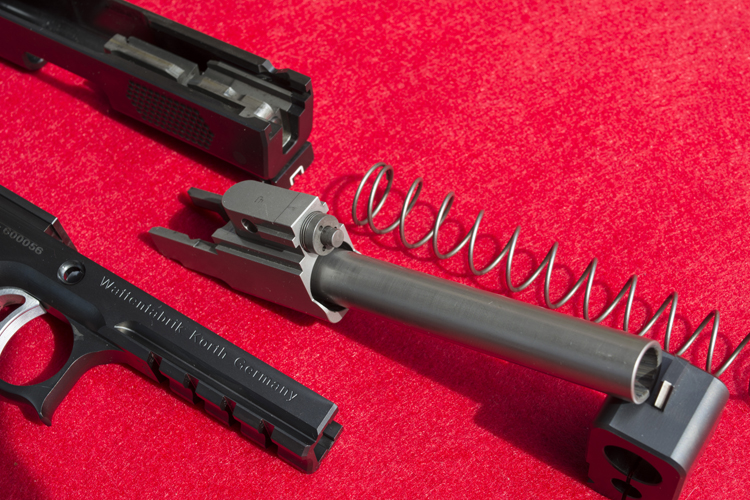 The roller delayed blowback which Mauser had prototyped in the Stg. 45M made it into production in the form of the German-designed, Spanish-built CETME Model 58, more commonly known simply as the CETME, the SIG SG 510, and, two years later and perhaps most famously, the Heckler und Koch G3 and later MP5. Yes, it’s very German.
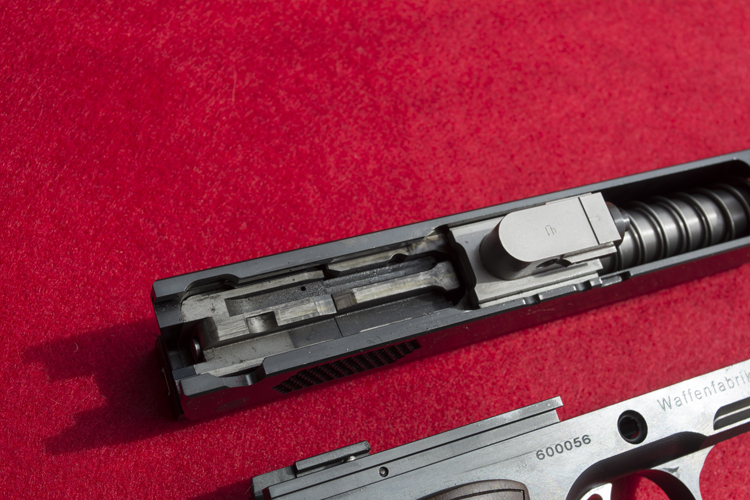 When the gun is fired, the carrier moves back immediately with the slide, withdrawing the wedge slightly. The rollers on the breech face section, which is pinned to the carrier through a slotted cutout to allow a couple of millimetres of travel, are now free to retract and ride inwards on the sloped lands of their recesses. When the breechface section runs out of travel and begins to move back with the carrier and slide, the rollers are no longer delaying the action from opening and the entire assembly moves backwards, extracting and ejecting the old brass, and picking up a new round on the way forward.
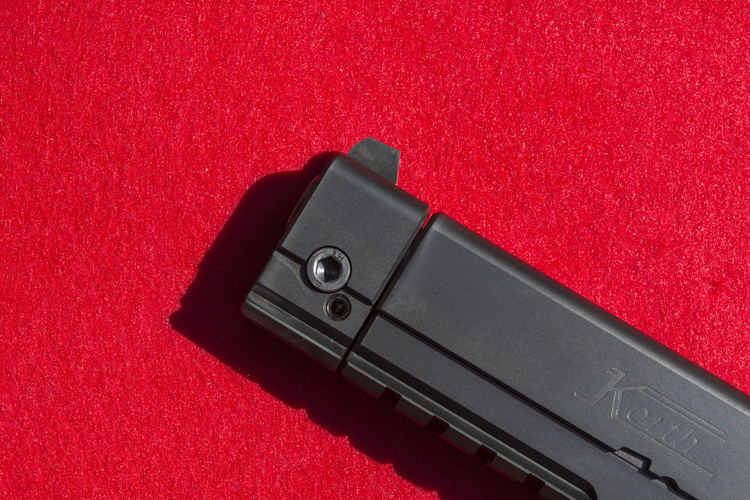 Well, one thing we can tell you: the accuracy, even by 1911 standards, is superb. The recoil is very gentle; the trigger gives up nothing to any custom manufacturer and breaks cleanly at around two and a half pounds. The trigger, disconnector, hammer and sear are all straight-up 1911 parts so there’s no mistaking the feel of either the break or the reset and the mechanics of achieving excellence on both are well understood. It shows. Rested, we could shoot groups just over an inch at 25 yards.
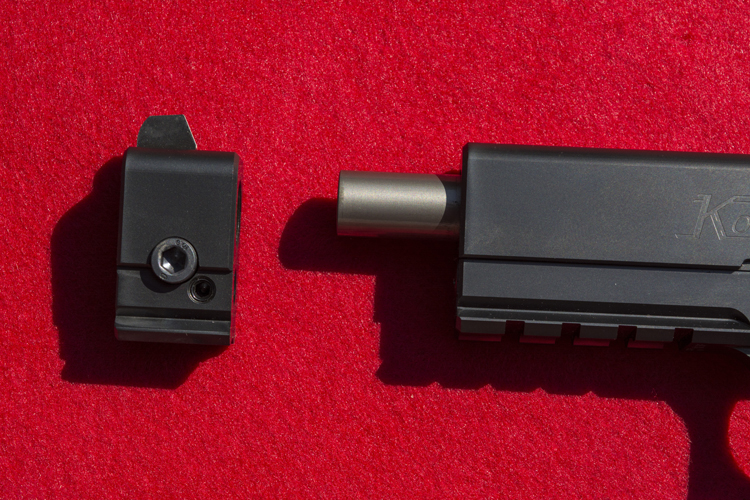 Similarly, older 47D magazines, Chip McCormicks, and Checkmates would all give failures to feed on the strongest recoil spring. The “medium” recoil spring is much more forgiving, slowing down the slide’s return to battery enough that the gun becomes more tolerant of varying ammunition, although we still had occasional glitches from Checkmate magazines, in particular with Winchester white box 230 grain FMJ.
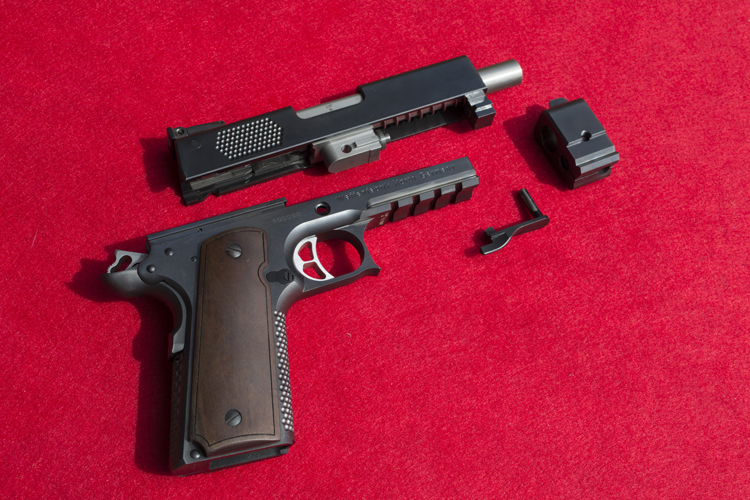 On the other hand, if you buy a Korth PRS and expect to use cheap magazines full of bulk surplus ammo, we don’t really understand why you chose the gun in the first place. It’s not there to be a cheap plinker; this is a four-and-three-quarter thousand dollar statement piece for collectors who want to revel in luxury. Please do not take your Maybach to Walmart for new tires; please do not buy a Korth and then complain that it cost you five boxes of ammo to figure out its ideal combination. This is thin-end-of-the-wedge gun collector exotica and if you’d rather just have a Glock, do yourself a favour and buy one.
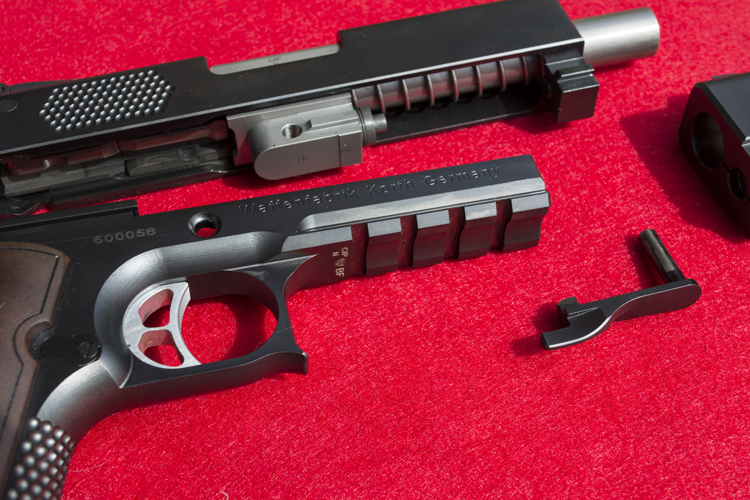 But we wouldn’t dismiss the fun had simply by showing it to others, either. We showed it off plenty, and it never stopped being fun. Collectors take note: this is hands down one of the strangest, most interesting firearms to ever cross our desks, and shooting it is a rare privilege indeed.
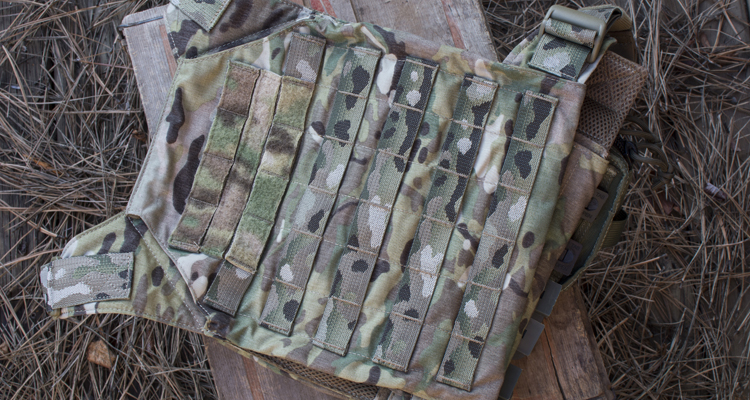 The only complaint we can come up with is this: the Minimalist won't work for smaller shooters. The shoulder straps simply run out of adjustment on little guys before the plates can be raised high enough to cover everything they need to cover. If your plates don't come up to the top of your sternum, they're too low.
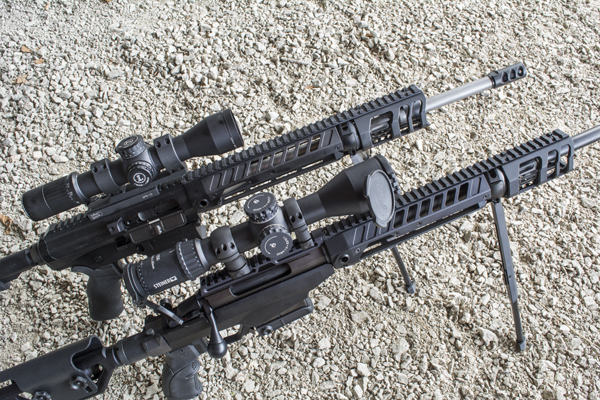 The legs are individually, incrementally, adjustable from six and a half inches up to nine and a half, and seat firmly into their positions with a simple pushbutton lock. The feet are grippy and the bipod will hold a very solid position as you lean into the gun to pin it down, with no indication that anything will give way under load. The locking mechanism that keeps the legs in their open position is similarly robust and we were unable to jar the legs closed either during normal firing or during what we’ll call our “abusive handling test.” The entire system is simple and durable, with few moving parts and quality manufacturing throughout.
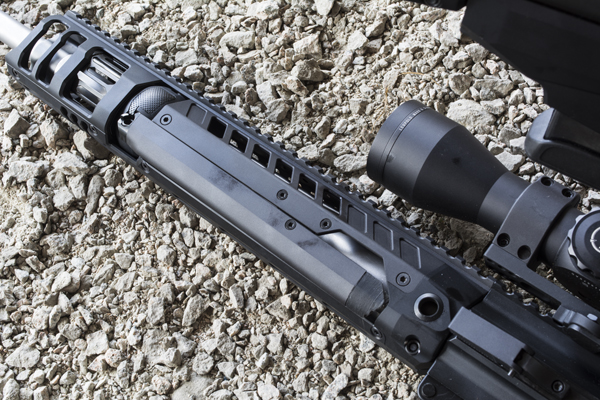 When the legs are folded in, they’re basically imperceptible, sitting flush within the rail system itself. So not only are there no mounts to break or adapters to adjust, there’s also no legs to snag on anything. For a pure target rifle, this might not seem like a big deal but for a field rifle? It’s a huge improvement. Besides which, the placement of the ball and socket joint around the barrel instead of below it makes for an extremely stable platform. It’s just a very well-thought out design.
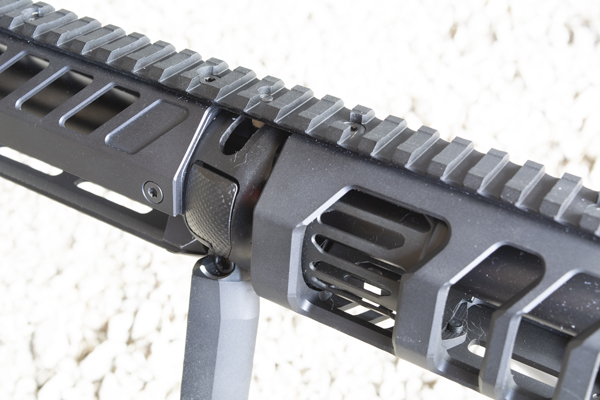 Granted, there are a couple of downsides: if your goal is unlimited modularity, well, this isn’t as modular as a universal rail with a conventional bipod bolted on. Of course, it’s also not as heavy as a bolted together setup. You can’t just remove the bipod, so your rail will always have a lower surface that’s a little more flexible than just a straight up rail, if that matters to you. It’s also not cheap, at $745 a throw for either model, but then if you add up the combined prices of a standard rail and bipod, you can reach that same figure pretty quickly.
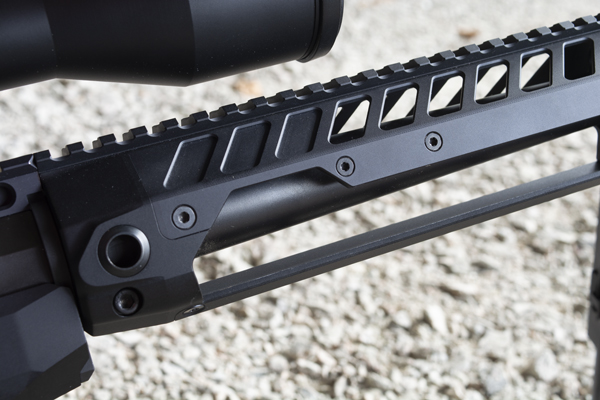 The only other caveat is that when the bipod is extended, you’re exposing the underside of the barrel, so don’t go doing mag dumps and then grabbing the damn thing. We realize this is the equivalent of saying “don’t drive with your eyes closed” or “battery acid is not intended for human consumption” but if we don’t say something, we’ll get angry letters from somebody. This ain’t our first rodeo.
 But a young journalist’s budget is far more comfortable with a used Remington 3200 than it is custom Perazzi. And so, while I was never really able to embrace the glorious levels of snobbery I witnessed, I did learn a lot about the justification for buying such guns (and there are very real reasons). The flip side is that it gave me a lot of insight into what makes a cheap shotgun, well, cheap.
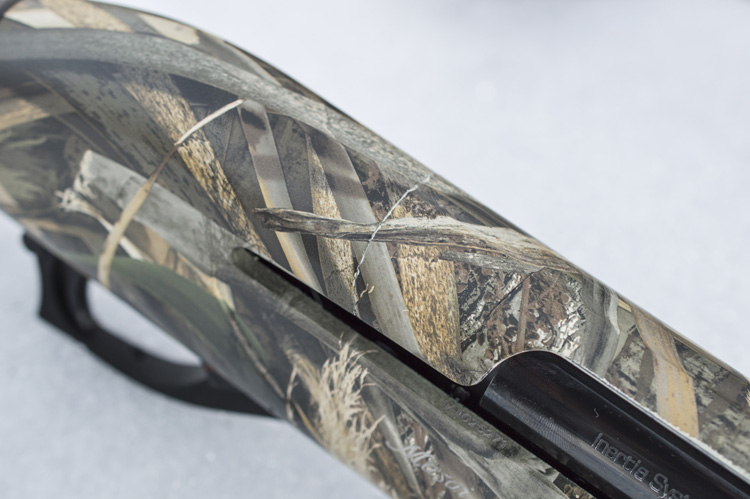 So let’s get something out of the way immediately: this is basically a Benelli. In fact, if you squint, it even kind of looks like the inertia-driven Italian guns it emulates. A relatively unique operating system largely pioneered and championed by Benelli, inertia-driven guns use springs, mass, and momentum to operate, and are highly regarded by many shooters due to both their light-shooting nature and cleanliness.
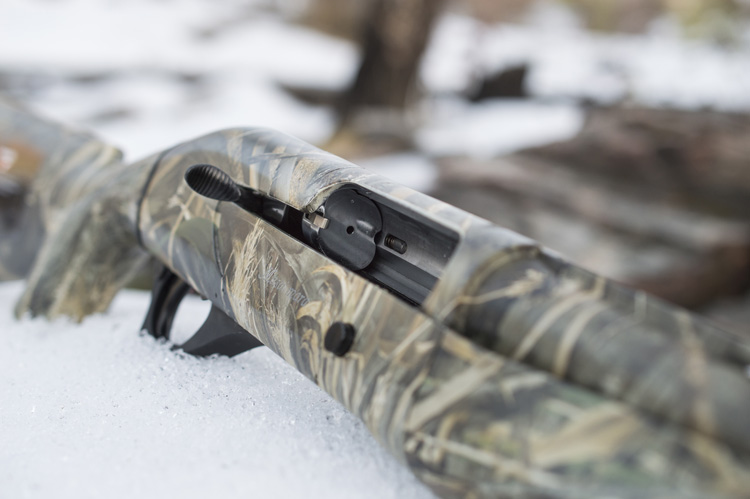 When the gun is fired, the inertia spring actually allows the gun to essentially recoil around the bolt carrier, which is momentarily held in place by the momentum of its own mass (an object at rest staying at rest and whatnot). As this happens, the locked bolt moves rearward into the bolt carrier, compressing that inertia spring. Once the energy stored in that now-compressed spring surpasses the energy of the recoil, the spring pushes the bolt and bolt carrier apart, initiating rearward bolt carrier travel as the bolt is still locked to the breech. The carrier goes rearward, the bolt unlocks, extraction and ejection occur, and when the bolt reaches the limit of its rearward travel the whole process begins anew as the action spring presses the bolt home.
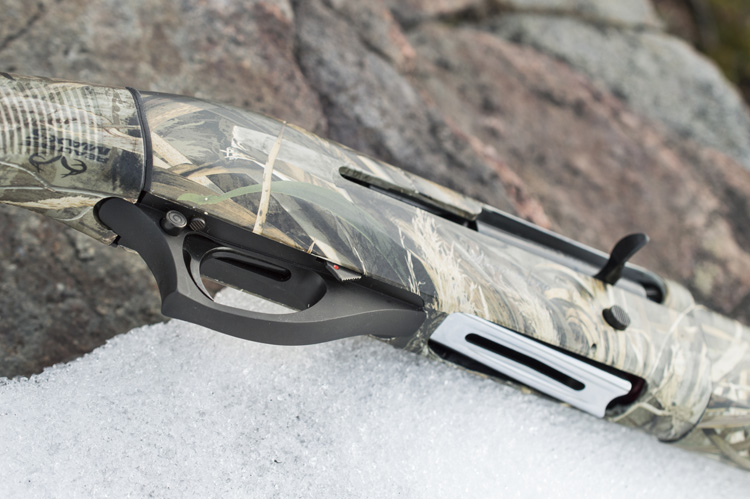
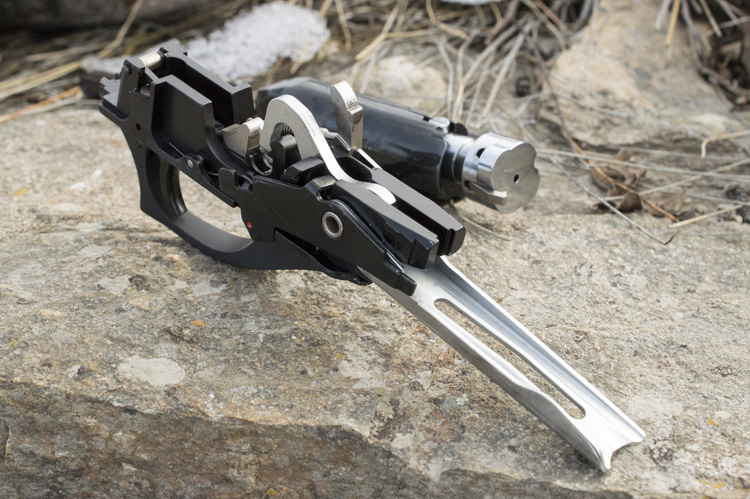 While the bolt assembly looks like it’s been lifted from a Super Black Eagle, the Retay Masai Mara does differentiate itself from its inspiration somewhat with one unique feature that I don’t recall having seen on a semi-auto shotgun: a removable trigger. With the gun cocked and the bolt forward, pressing a tiny button on the trigger mechanism releases a latch at the back, allowing the entire assembly to be pulled downward and out of the gun. This obviously makes cleaning the Masai Mara extremely easy, but as the Retay documentation reminds us, is also something of a safety feature. Simply remove the trigger, lock it up somewhere, and you have an inert gun. Honestly, it struck me as a bit of a silly feature before the gun arrived, but once I’d taken the trigger out it really started to make more sense. Legitimately, it will make cleaning and lubricating the trigger a lot easier, and that means it’s something you’re more likely to do regularly… and that, of course, aids reliability.
 For example, the bolt carrier shows signs of having been fitted, with some apparent stoning of its rails. That’s nice, because it means care has been taken to ensure the gun fits together well, but the evidence of the fitting work is rougher than you’d find on other guns; the files obviously being coarser. The bolt itself bears signs of having been tumbled to remove machine marks prior to chrome plating, which again is a nice step to see to ensure a good chromed surface, but tumbling such items can lead to marks on protruding components and so we found one small imperfection on the back of a bolt lug where the corner of the lug obviously tumbled against another hardened thing. But again… for substantially less money, do you really care if there’s a pinhead-sized ding in the back of a bolt lug on your duck gun? We sure don’t, and if you do, we’d remind you that $1200 can buy a lot of Molson products with which to wipe those cares away.
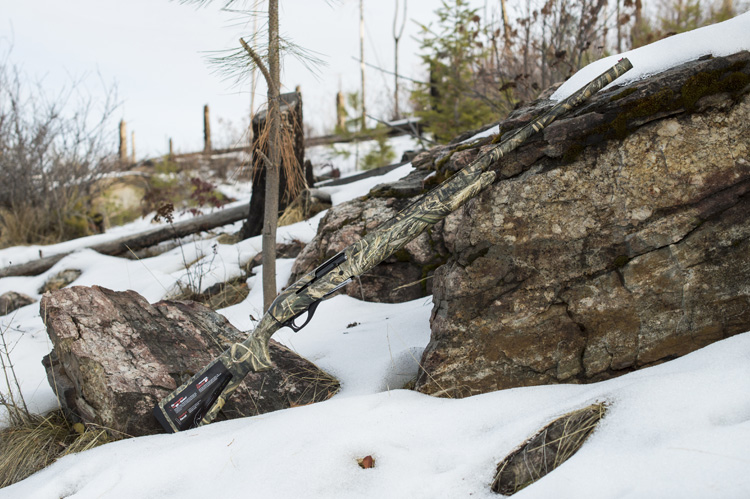
 Once assembled, the gun fits together well, too. It’s one of those guns where everything is “just tight enough” to feel well put together but not forced. Try as we might, we couldn’t get any flex or wiggle from the fore end, and the stock is equally solid. At the back, a nice and thick recoil pad is fitted, and works well. And of course while Retay makes the Masai Mara in various finishes, the one pictured here is obviously their camouflage finish, which is a properly licensed Realtree Max 5. It appears to be your standard hydrographic finish, so its reasonable durable, but we did notice some chips in the finish on sharp edges like those on the rear of the barrel. Of course, being an obvious duck or goose gun, it probably wouldn’t take long before those were the least noticeable imperfections… at least with my luck.
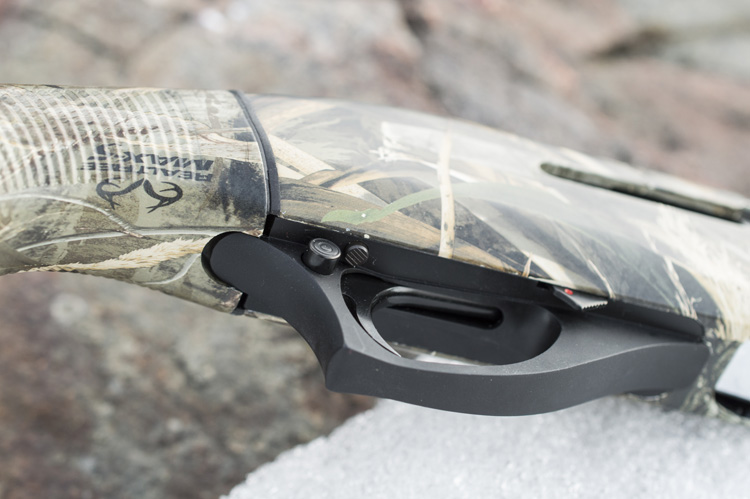 Now, the one downside to the Benelli inertia system is known as the “Benelli click.” This is the sound a Benelli makes when you pull the trigger on one when the bolt hasn’t gone back into battery. Because the only thing pushing the bolt back is the energy contained in the inertia spring, the strength of the action spring is limited; too strong and the inertia spring would not be able to cycle the action completely or hold the action completely closed if the gun is bumped.