Cooey Model 600 - Old Faithful
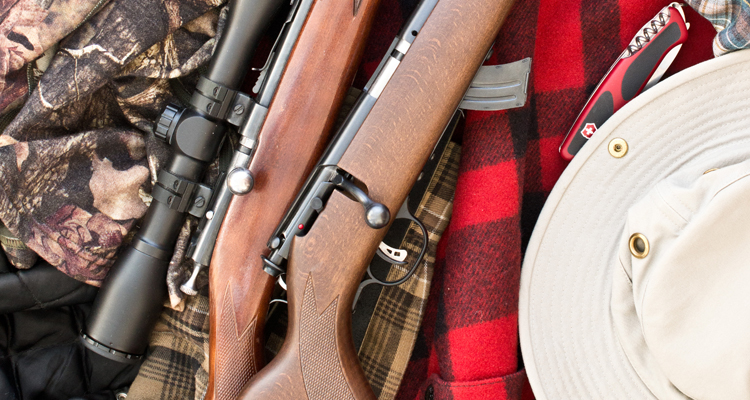
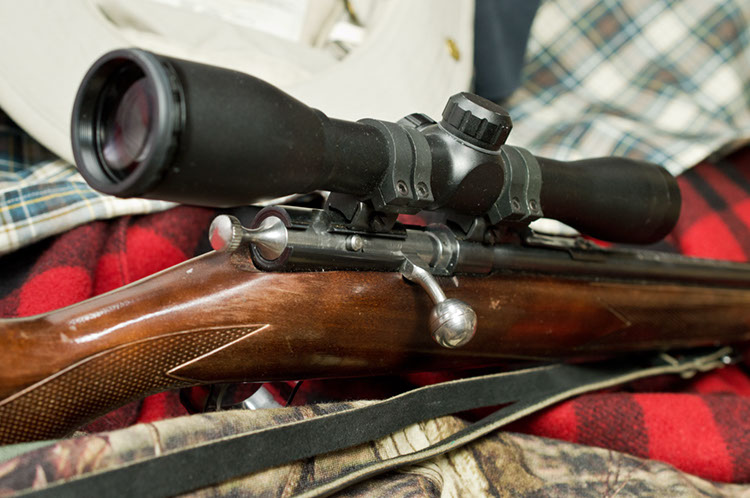 Like so many things, my feelings about the Cooey Model 600 are a matter of context. Were I not a Canadian, and were this not a gun that was literally handed down to me from my father, I may not feel that this particular rimfire rifle is the one all Canadians should at some point own. But the fact of the matter is, I am Canadian, this was my dad's gun and, thus, I believe everyone should own a Cooey.
Herbert William Cooey was the epitome of Canadian spirit. Having traipsed about and generally wasted his youth (as many of us do), he came to Toronto a failed die maker's apprentice with little to his name, and even less to his credit. But, at the age of 23, he opened a machine shop in Toronto and billed himself as a "mechanical expert and practicing machinist." Not entirely a lie, he would complete the construction of an automobile of his own design (which boasted the use of a preheated fuel supply and dual exhaust valves) just three years after opening his doors in 1903. Not surprisingly, his ingenuity eventually led to some success and he was contracted to produce firearm parts for the war effort during the First World War.
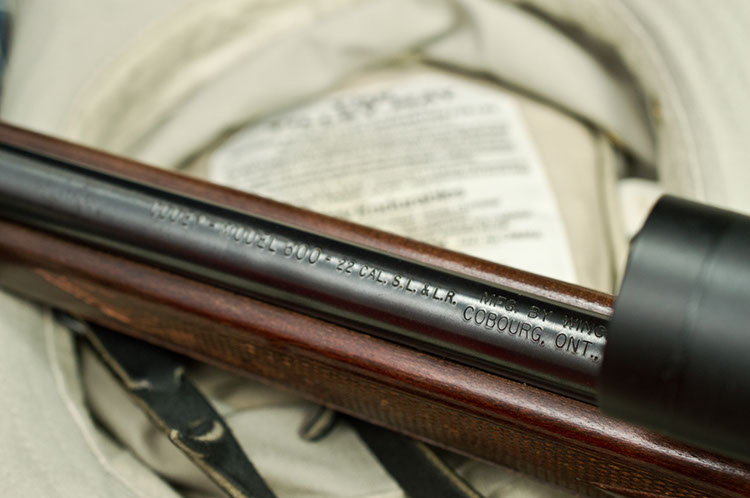 This led to a natural segue for Herbert and he reinvested much of his wartime profits back into the company by designing and manufacturing his first firearm: the single shot rimfire Cooey Canuck. Years later, after winning an Olympic silver medal for trapshooting, Cooey would create a bolt-action repeater with a tubular magazine and call it the Model 60. Debuting in 1939, the 60 would be replaced by the evolutionary Model 600 in 1967, after the brand was purchased by Winchester.
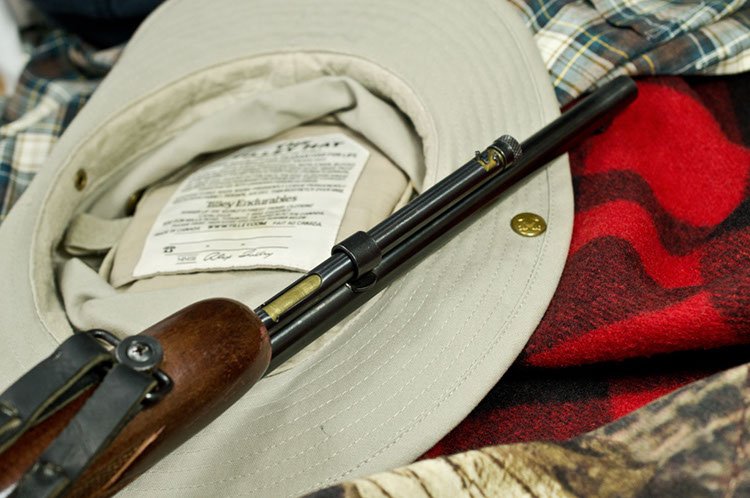 While my old Model 600 may bear the Winchester brand upon its barrel, it is a Canadian production and, in reality, is almost no different from Cooey's older Model 60. And as you'd expect from such a gun, it's excellent. Even after years of use, abuse, and (if we're honest) neglect, it still shoots incredibly well and competes with newer bolt action rifles such as Richard's Savage. At 50 yards, with decent ammunition such as CCI Standard Velocity, it'll outshoot most people and off a rested position it will turn 10 rounds into one ragged hole no larger than a half inch across. Use crappy ammunition, though, and all bets are off.
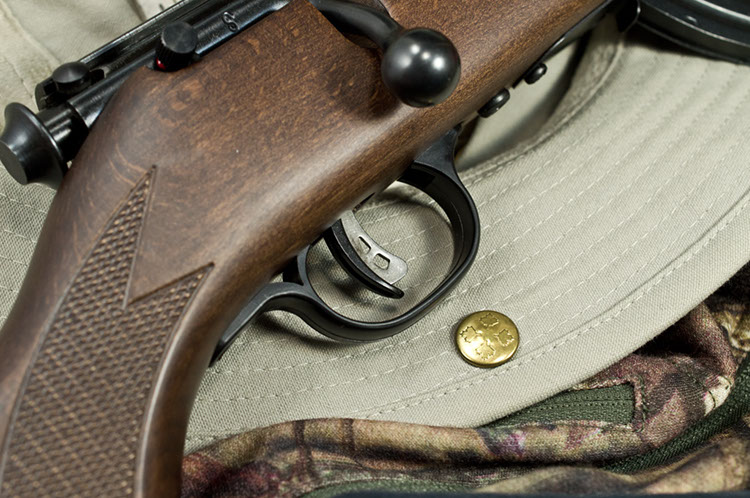
Of course, there have been advances in the years since this gun was made and they are apparent in certain areas. Specifically, the trigger leaves a lot to be desired. It's pretty terrible, with a ton of creep and a couple of discernibly gritty portions. I've grown used to it over the years and can stage it relatively well, but anyone else that picks the gun up always comments on the terrible trigger pull. Then, there's the loading. The tubular magazine is a complete pain, and the soft wax-coated tips of most .22 ammunition bind up on the follower, so loading it requires the follower be spun as it is slid down into the magazine tube. It's another quirk of the gun you just need to learn. Oh, and the ejector isn't the most enthusiastic, so unless you give the bolt a good tug to the rear you're just asking for the controlled-feed action to bind up.
Some of these issues are intrinsic in the design. A tubular ma gazine with a removable follower will never be as easy to load as a box magazine. And while the incredibly simple trigger certainly could be reworked for a shorter pull, the construction of the trigger doesn't doesn’t make it well-suited to light pull weights; in short, I wouldn't trust the gun to remain safe enough to carry afield with any trigger work.
But with all that said, these are solidly made guns that really don't have many problems. And, like so many other items manufactured over 50 years ago, they are largely user-serviceable. For example, the extractor that wraps around the bolt head on most Cooeys is made of spring steel and can be easily removed, cleaned, and tweaked as needed. There are no plastic nor metal injection molded parts to break, so there is rarely any need to replace parts outright, and the barrels are quite excellent.
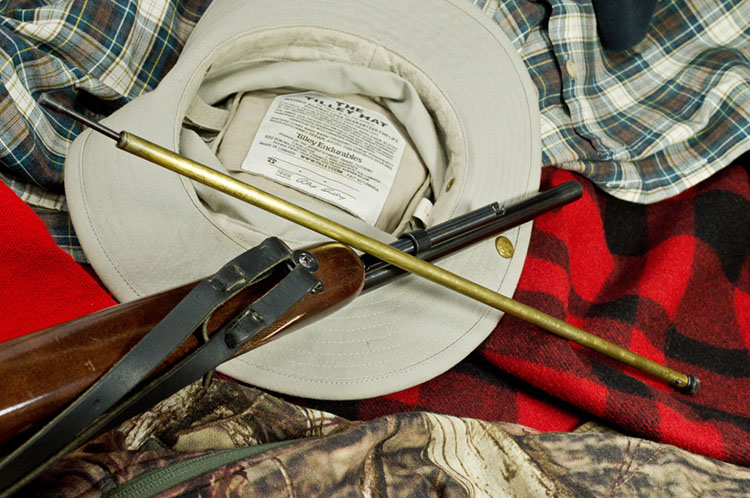 I will freely admit that it would be easy to find a more practical and functional gun, one with with an easy to load magazine and a better trigger. But there's more to firearms ownership than simply pulling a trigger. Sometimes it's a matter of taking pride in owning a very real part of our nation's history, or in this case, a piece of my own family's history. One of my favourite aspects of the shooting hobby is that it grants us the ability to step back in time and shoot a rifle, pistol, or shotgun that may be over a hundred years old, but performs as well today as it did when it was new. One could quite easily purchase a 60 year old Cooey rifle and have a precisely the same amount of fun with it as one could a brand new rifle.
So whenever I see the old Cooey standing in the gun safe, with that leather sling my dad made for it in his youth hanging from the sling swivel that refuses to tighten up, I think about my own history and know that no matter what, this isn't just the one rimfire I wouldn't be without – its’ the one gun I'll never part with.
Savage Mark 2
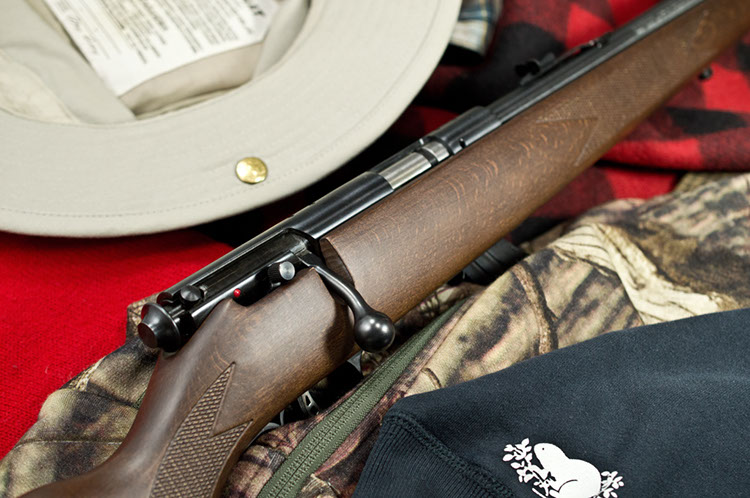 When discussing rifles of a Canadian flavour, it is an inevitability that the fantastic rimfires manufactured by Cooey and Lakefield will enter your thoughts. Seemingly back to back in their respective runs, they have been the most significant manufacturers of smallbores in Canada since the early years of the 20th century. Though both operations were bought out some time ago, Lakefield by Savage Arms the former by Winchester, they remain staples of rifle collection – the proverbial first rifle for many Canadian shooters. For us here at Calibre, it is no different. Within our “arsenal” of sorts – because those two firearms alone seem to constitute such according to the media – sits a Cooey Model 600 and a Savage Mk II G. Unsurprisingly, a debate arose between two of Calibre's staffers. Dan, long-time owner of his Model 600 claims his Cooey is the rifle you should own. Richard, on the other hand, thinks the Savage is the better option. So which is it?
It will come as no surprise that much of what makes the Cooey great will be its sense of nostalgia and great Canadian pedigree – an Olympic pedigree even if one of his rimfires wasn't used to win Canada a silver medal in trap shooting. I'm sure Dan will base the merits of Cooey largely on such and I don't intend to disagree. The Canadian essence is undeniable, a trait even I appreciate as much as the next – especially when purchasing a rifle. So why the Savage instead? Well, it's quite simple and it may or may not surprise you. Other than being a superior rifle, what's surprising to learn is that, at heart, the story of Savage Arms' rimfire rifles are as every bit Canadian as Cooey's.
 With humble origins in Utica, Ney York, Savage Arms was established in 1894 and enjoyed a fairly prominent presence in the commercial firearms market for some time, mostly on the merit of their Model 99. Within a few decades, Savage stamps could be found on everything between high-powered rifles down to an array of .22's. The troubling bit though is this success wasn’t to endure; seeing the company struggling enormously by the mid-sixties and an existence which would continue well in the eighties. By 1988, with the only the Model 110 rifle in production, Savage hit its low point and sought bankruptcy protection under new leadership with an eye for the future. Emphasis was now placed on economic firearms which sought to maximize quality in the manufacturing process with innovations largely seen on rifles at higher price points. Suffice to say, it worked and the company rebounded.
Meanwhile, there was a company in Eastern Ontario called Lakefield Arms which put up shop in 1965. Over a run of 30 years, Lakefield essentially replaced Cooey as the consummate Canadian smallbore rifle with a series of popular semi-automatic and bolt action models. Most noteworthy were the Mk I, Mk II, 64B, and the 90 series of rifles – touted for their solid actions and excellent barrels; a pairing which made them tack drivers with the right ammunition. Despite its humble beginnings, this outfit would grow to become the largest commercial firearms manufacturer in Canada – a trait it maintains today, even if it is no longer known as Lakefield. By the mid-nineties, Savage Arms sought to maintain the momentum of their new found success and diversify its inventory. You might call it a match made in heaven. Or an offer that couldn’t be refused. Whatever the case, Savage purchased Lakefield Arms in the 90's, re-branding Lakefield to what we know today as Savage Arms Canada.
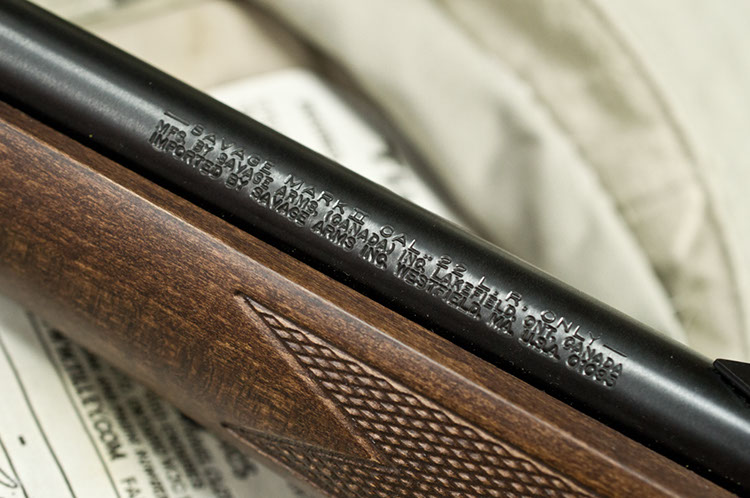
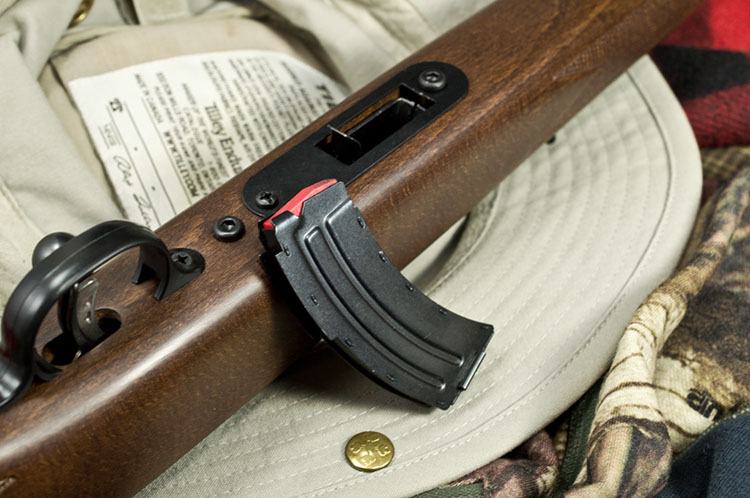 Though rifles with the Lakefield stamp are that of yesteryear, the essence is ever present in the Savage rimfires manufactured today – only better. As is in most things, the natural evolution of anything is toward adaptability and improvement – with the latter being exactly that in Savage's rimfires. Unlike the Cooey, which was bought out by Winchester and no longer made under any guise, the rifles made today by Savage are essentially the same ones which Lakefield always have, down to their model names. This is done to the tune of about 185,000 examples each year – each and every one in the same facility, by the same technicians and employees, with the same devotion and pride in the Eastern Ontario town of Lakefield.
The Mk II G sits near the price point bottom of the wide variety of Savage smallbores, which includes a plethora of options for the Mk II alone. As was seen in our rimfire feature in July/August of 2013, the Mk II G possessed the sense of a better built, better finished rifle in comparison to its adversaries. While the Mk II G is devoid of their AccuStock barrel bedding process on its otherwise splendid wooden stock, it does implement another Savage innovation in the AccuTrigger feature. If either sound like gimmicks, rest assured they’re not. In terms of the AccuTrigger, it is a design by Savage that couples with benefits of a light, crisp trigger pull without the sacrifices of safety which can be adjusted to suit personal preference easily enough. Within the trigger is their AccuRelease mechanism which acts to catch the sear unless it is mutually depressed by the shooter in concert with the trigger itself. The end product is a desirable trigger weight without pesky trigger creep - perfect for shooting tight groups with a safety vessel that doesn’t disrupt the shooter. Win, win right?
 Further to its superior trigger assembly, another huge benefit of the Savage is its ten round, detachable box magazine. Though these words won’t be mentioned in this publication, you should rest assured that many a profane one was uttered while loading the Cooey’s cumbersome tube mag by yours truly. That said, I may need some convincing on the long term durability of their mags.
Though it would be unfair to compare the action of a new rifle to that of a design old enough to be my grandfather, I will. And by doing so, I offer the opinion that the Savage’s action is smoother and far more consistent in correctly extracting and chambering casings – which isn’t to say I didn’t encounter the odd jam during extraction. Even better for us lefties is the availability of left handed models in the GL. I'll let you guess what L stands for.
But above all else, to me anyway, is its accuracy. One of the things I really took from it all was its out of the box accuracy. I would even suggest that, despite being $200 cheaper than my CZ 452, it’s probably going to produce groups in my hands that are negligible in size - at least in my humble expectations for success. Undeniably, the CZ is the better rifle – but we’re talking entry-level .22’s and for me, the Savage is the crème de la crème of the lot, even if a new one will cost you about $100 more than the average going price for a used Cooey.
It’s difficult to find fault with the Savage. By comparison, yeah – the quality isn’t that of say my CZ; but at half the price, why would it be? And let’s be clear, it’s not entirely bad either. By fair comparison, it’s as good as or better than anything you’re viable to find from Marlin or Remington in around that price. So while the Savage Mk II G may not share the same silver lining of sorts in its history as does the Cooey, its roots were seeded in Canada long before it was known as a Savage. So in closing i say this: To the fine folks in Lakefield, thank you – keep up the great work.

 SUBSCRIBE TO CALIBRE MAGAZINE
$30.00 / year
SUBSCRIBE TO CALIBRE MAGAZINE
$30.00 / year
 UNAPOLOGETICALLY CANADIAN MEN'S T-SHIRT
$29.00
UNAPOLOGETICALLY CANADIAN MEN'S T-SHIRT
$29.00
 UNAPOLOGETICALLY CANADIAN WOMEN'S T-SHIRT
$29.00
UNAPOLOGETICALLY CANADIAN WOMEN'S T-SHIRT
$29.00