There’s something so satisfyingly Teutonic about the umlaut. The term for a pair of dots above a vowel that serve to indicate a different pronunciation, the umlaut is used in Germanic languages, and always seems to add an oddly satisfying effect to a word. For example, the simple addition of the proper umlaut can be the difference between talking about a boring (but effective) ride sharing app and sounding like a proper Bond supervillain. It all depends on if you say Uber or “über.” Essentially, to those of us for whom the umlaut has an exotic novelty, they serve to fortify already German words into terms that sound even more German. Which makes it all the more appropriate that one of the most quintessentially German guns we’ve ever come across should have that fantastic linguistic accent in its name: The Anschutz 1771.
Although best known for their popular and long-lived rimfire rifles, the Anschutz 1771 is the latest in a recent spate of centerfire rifles produced by the 161-year old rifle manufacturer, and is a scaled-down, short-action version of the Anschutz 1781 rifle chambered in .30-06. Intended for everything from deer to varmint hunting, the 1771 comes chambered in .204 Ruger, .222 and .223 Remington, or .300 Blackout, with two available stock options and a pair of barrel lengths.
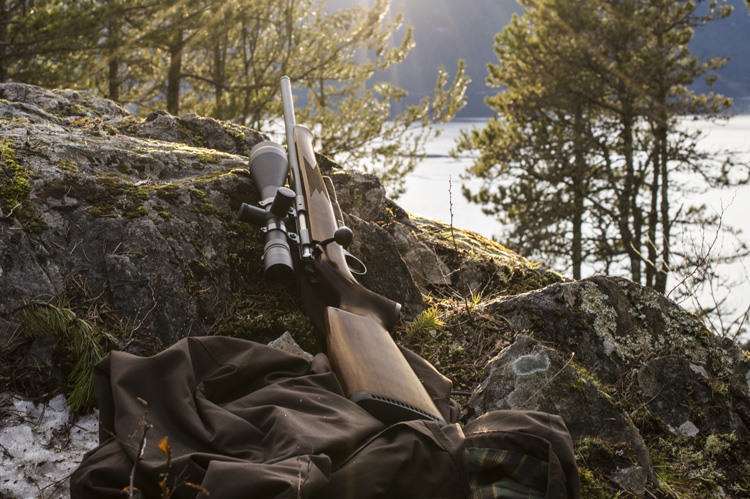
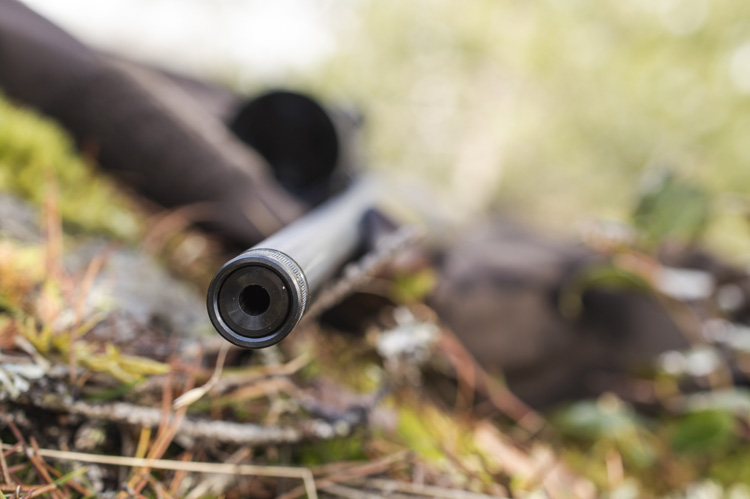 The Anschutz 1771-D and 1771-DG models are quite traditional, and feature the same German-style walnut stock but differ on barrel length and style, with the -DG model possessing a 20” threaded barrel in place of the entry-level -D model’s 23” standard barrel. By comparison, the more elaborate GRS model borrows from Anschütz’s sporting history and takes that same longer-barreled action from the -D model and places it into a very sculpted laminate stock from GRS that features an adjustable length of pull and comb, as well as a much more pronounced grip. In short, it’s more akin to a target or purpose-built varmint rifle, rather than a conventional field rifle. Oh and in case you’re wondering, “D” in Anschütz terms means “single stage trigger,” while “G” denotes a threaded barrel.
If none of the above options are of interest, like most small-scale European manufacturers, Anschutz will assemble a 1771 to your specification. Merely select a caliber, barreled action (from either the -D or -DG options), stock, and finally… trigger. Out of the box all -D, -DG, and GRS models feature the same Direktabzug 5097/2 trigger assembly; an adjustable single-stage unit that comes preset to 2.64 pounds but can be adjusted as low as 2.2 pounds or as high as 4.41 pounds. Other optional triggers include the Direktabzug 5097/2 Tuning, which can be adjusted from 0.99 to 1.54 pounds, or the Druckpunktabzug (aren’t German names fun?!) 5098/71; a two-stage feather-light target trigger that runs from 0.66 to 1.76 pounds.
As of late, there’s been a bit of a trend amongst German rifle manufacturers to advance the bolt-action platform, using things like expanding bolt heads rather than conventional lugs and whatnot. While the Anschutz 1771 doesn’t go quite that far, it doesn’t exactly follow the expected blueprint, either. While it might look decidedly traditional, the 1771 borrows heavily from Anschütz’ experience in the sporting arena, and adds a healthy dose of modernity to boot.
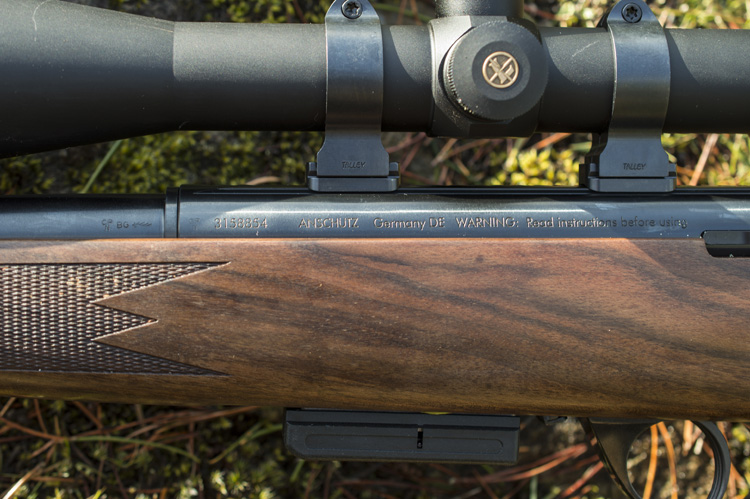
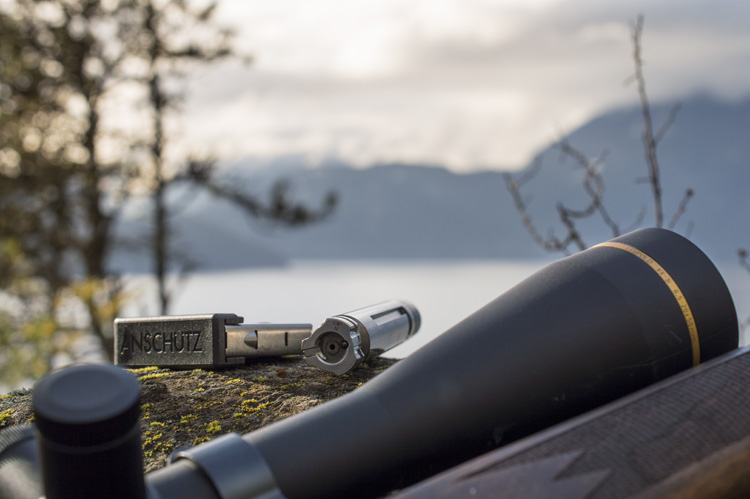 That means starting off with an enclosed tubular receiver employing an ejection port rather than an open top. This dramatically increases rigidity, and due to the tubular design (there are no bolt raceways machined into the sides), reduces the machine operations required in manufacturing the receiver. That means there’s less opportunity for tolerances to open up.
Interestingly, while so many manufacturers prefer to use the prefit barrel and barrel nut combination (the Savage method) to secure their barrels these days, Anschütz has instead opted to press the 1771’s barrel in place, securing both it and the barrel shoulder with solder. The barrels themselves are cold-hammer forged and finished off with an 11-degree crown, before the rifling and inner edge of the crown are lapped, just to ensure no tool marks remain. All Anschutz 1771s also feature the same medium-weight barrel contour; an obvious nod to the rifle’s preference for extreme accuracy over light-weight portability.
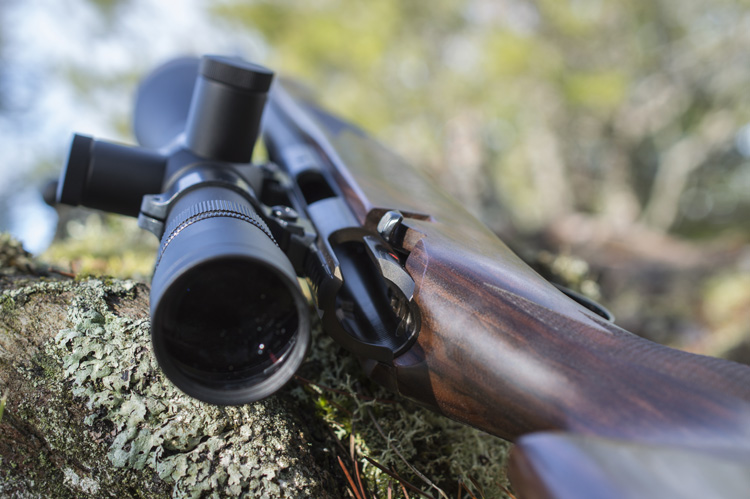 At the core of the action is a relatively unique six-lugged bolt. With a full-diameter bolt body (wherein the bolt body is the same diameter as the bolt lugs), the entire bolt assembly is quite large, and according to Anschütz the total locking surface provided by all six lugs is over 70 square millimeters. The lugs themselves are arranged in the usual three-lugged layout, with a second row of smaller lugs position just aft of the primary locking lugs, giving the rifle both tremendous strength and good speed with a 60-degree bolt throw. After cleaning the rifle we dabbed some machinist’s blue on the locking surfaces and found even, consistent, and hearty surface engagement.
Cocking is accomplished on opening, thanks to the large polished stud protruding behind the bolt handle that bears against the receiver, and feels easier than on many other 60-degree bolt-throw rifles; a function of both the bolt handle’s decent length and oversized knob as well as a properly set up cocking ramp for the striker assembly.
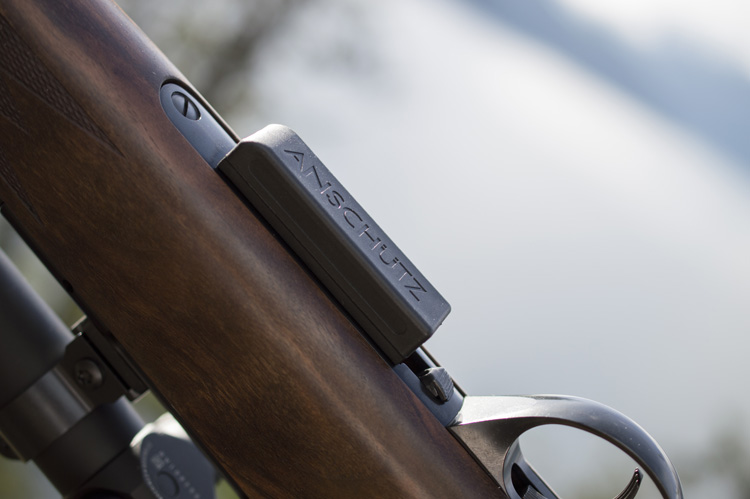 Beyond the ridiculously overbuilt nature of the six-lugged design, the most interesting part of the 1771’s design is the bolt’s extractor. A sliding extractor riding in a machined slot in one of the bolt lugs, the extractor’s engagement on chambered rounds is huge; it grabs over 25% of the total circumference of a round’s rim. And the method by which it’s sprung is interesting too. Instead of using tiny conventional springs, Anschütz instead uses a piece of spring steel wire that travels through the bolt lugs behind the extractor, and then wraps around the bolt head; an interesting system that’s both far simpler and capable of exerting far more pressure on the rim than the ball-and-detent system found on many other sliding extractors. As such, the Anschutz 1771’s extractor grabs more of the case, more firmly, than almost any other extractor we’ve seen.
But for all the interesting engineering that’s gone into the Anschutz 1771’s design, the manner in which it’s built will surprise no one; this is an expertly made rifle produced in the grand German tradition. From the quality of the gun’s bore and rifling, to the perfectly consistent bluing, it’s precisely the sort of rifle you could use for a lifetime and fully expect to hand down to future generations in no worse condition than you received it.
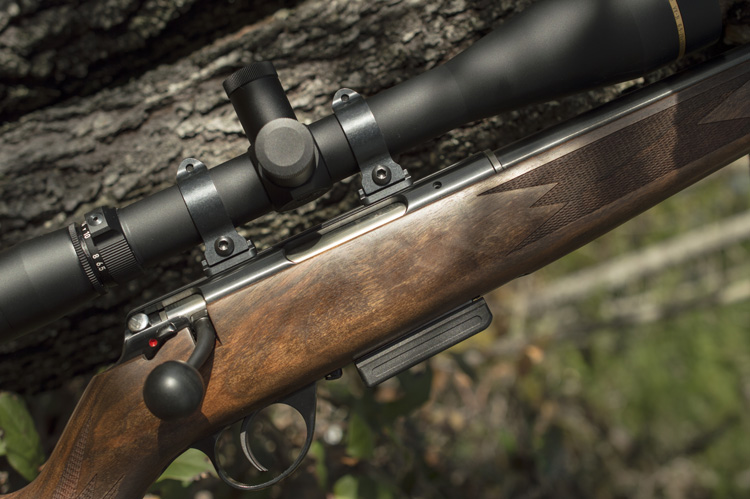
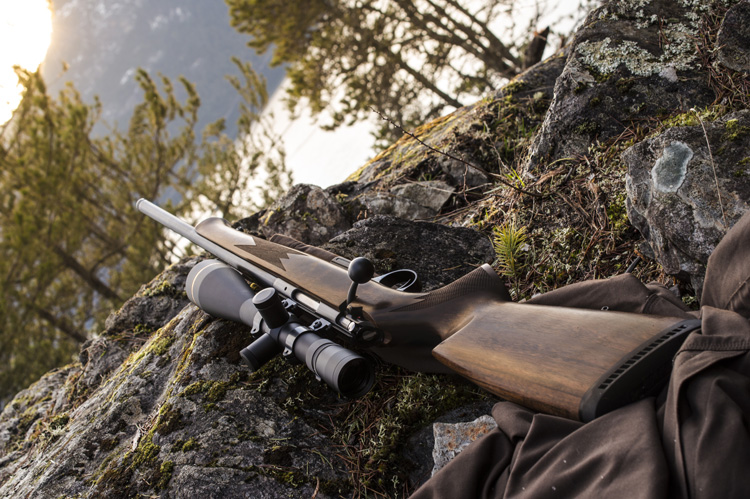
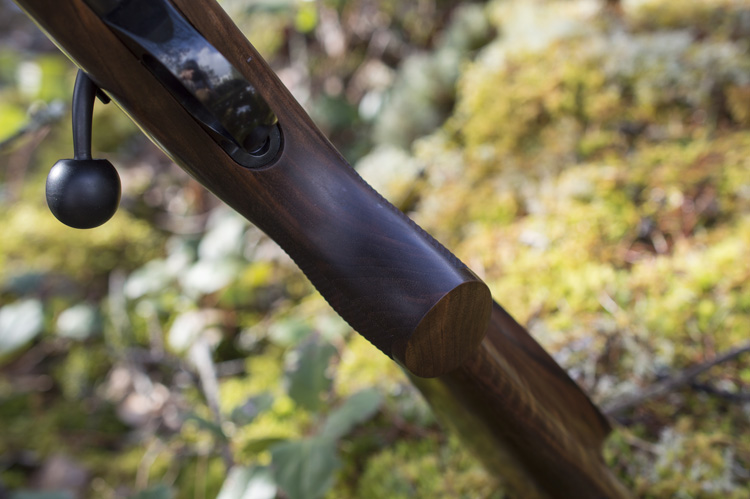 First off, there is obviously the stock itself. German rifle manufacturers have a knack for selecting walnut that’s interesting, and yet understated, and finishing said walnut extremely well. In the case of the Anschutz 1771 that means using a good oil finish that leaves the stock feeling very natural, and not overly polished (literally; the finish is a nice semi-gloss). In terms of shaping, the profile is very European, with a pronounced Monte Carlo curved comb and an oh-so-pretty Schnabel fore-end. The grip area reflects Anschütz’ sporting lineage though, and departs from the traditional profile with a slightly more vertical grip area, which is then backed up by a subtle right-handed palmswell. Sadly, no left-handed options exist for any of Anschütz’ centerfire offerings, as yet. And of course, like any decent modern rifle, the barrel is entirely free-floated inside the stock and quite generously too, we might add. We especially like the even nature of the stock inletting; in a time when so many free-float barrel channels end up uneven or crooked, it’s nice to see a perfectly parallel channel.
And of course the quality of the metalwork is no different. The trigger guard is a meaty chunk of blued steel, the top of the receiver has been nicely milled in a matte-finished wave pattern to reduce glare (a carryover from the Anschutz 1781 rifle that can be had with iron sights on the barrel), and everything just feels nice. For example, even when the bolt is pulled to the rear, there’s no wiggle in it. And when it’s closed? You can’t fit a human hair between the inside of the receiver and the bolt body. We especially like the gracefully swept back bolt handle and oversized nylon bolt knob; they’re a nice marriage of classic rifle style and modern convenience. And the rear of the receiver is a work of art. The receiver and bolt are both machined so as to slope gracefully towards the stock, creating a nice line that’s made even more elegant by the extensive blending work that visually ties the stock, bolt, and receiver together.
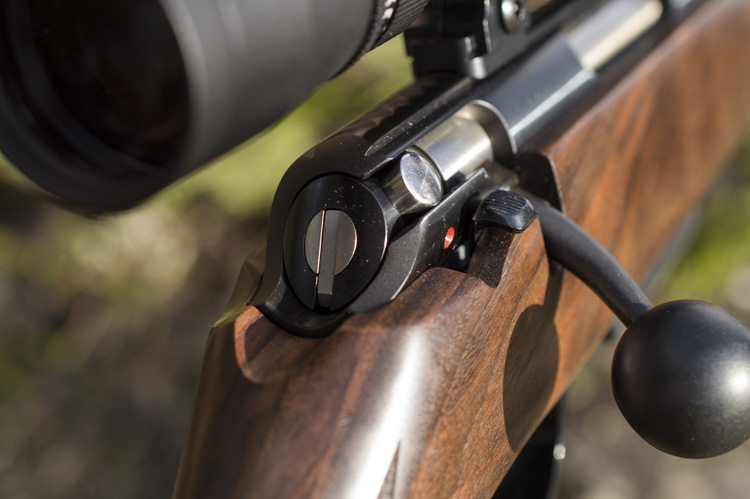 However, nothing is perfect, and in the case of the 1771 there’s two areas specifically that seem incongruous with the rest of the design: The safety, and the magazine release. Both are made from (admittedly heavy gauge) sheetmetal, which stands in sharp contrast with all the otherwise expertly machined components, and they just don’t feel as nice as the rest of the rifle. And in the case of the safety specifically, the on/off detent is quite stiff; you won’t be quietly nudging the safety off without some pretty substantial break-in time we’re guessing.
Also, and this isn’t so much a complaint as an observation, the Anschutz 1771 is not terribly light. Unloaded, our tester came in at 7 pounds, 12 ounces, which became almost 8.5 pounds (8 pounds, 6.5 ounces specifically) once we’d topped it with an optic and added ammo. That’s not an accident though; hunting in Europe typically involves a lot less hiking than North American hunting, and usually involves a lot less varieties of game. As a result, a European hunter will usually own less rifles than a North American hunter (due to less need to have a varieties of rifles for the variety of game we enjoy here), but will place a greater importance on accuracy and quality than weight. If you could only justify one rifle, and spent most of your hunting season in a blind or stand, you’d want a nice, accurate rifle that you could hand down to your kids, too, right?
Given the care and attention that’s obviously gone into the Anschutz 1771’s design and manufacture, and its status as a premium rifle from the country that pretty much invented the modern bolt-action rifle, we had high expectations… and we weren’t disappointed.
To get right down to it, we shot a selection of .223 ammunition and netted a best result of 0.90 MOA. We shot all our test groups at 100 metres, off our Vertx range bag (which serves as an excellent rifle rest), using a Leupold VX-3i with one of Leupold’s custom CDS turrets on it. Specifically calibrated for the Hornady 73-grain VLD load, the CDS system takes into account the ballistics of a given round out of a given barrel, and allows the user to simply turn the custom-made elevation turret to reflect the range to target. You send Leupold’s representatives the necessary ballistic data, and they engrave a turret that will allow you to dial range directly. We didn’t get a chance to stretch its legs much, but on a sojourn out to Crown land, we did find the system accurate out to the 300 yards we were shooting on that particular trip.
 Now, we will add that we didn’t have as many varieties of .223 as we’d have liked to have for this test. Unfortunately, as is so often the case in Canada, specific loads can be difficult to procure, and although we suspect the 1-in-9 twist barrel would have really excelled with more loads between 62- and 69-grains, finding .223 ammunition in those grain counts was difficult. However, the gun still put up impressive numbers with both the Remington Premier Match 69-grain loads that produced our aforementioned smallest group, as well as some surprisingly heavy 77-grain Nosler Custom match ammunition that printed a group measuring just 0.96 MOA. As always, we suspect smaller groups would be best realized with handloads, especially seeing as the four round magazine is quite long and would allow for bullets to be seated farther out to close the gap between a chambered round and the rifling. All of the factory ammunition tested left at least 0.1” between the nose of the bullet and the front of the magazine.
Obviously the mechanical features, such as the well-made barrel and good bolt engagement are key components in the gun’s accuracy, but the trigger deserves mention as well. The 5097/2 trigger set at the factory 2.64 pounds is a gem. But then again, what would you expect from a company that dominates international target and biathlon competition at the highest levels. We could tell you it breaks like glass and whatnot, but honestly, do we really need to hyperbolize? It’s good.
 To understand and truly appreciate German rifles, one must remember one thing: Most German arms manufacturers can trace their company lineage back over a century, and when your local cohorts includes names like Steyr, Sauer, Heckler & Koch, and Mauser, there’s a good degree of respect for the company name and the products that’ll wear that name. In the case of Anschütz, a company founded in 1856 by one Jochen Anschütz is, believe it or not, again headed up by another Jochen Anschütz; representing the fifth generation from the Anschütz family to run the company.
 And when your company executives are counted by the generation, you tend to take a longer perspective on your product’s life cycle as well… which brings us to the defining characteristic of the Anschutz 1771. We opened this review by saying it’s a quintessentially German rifle. And it is. It pairs the German penchant for practical and intelligent innovation with the same old-world craftsmanship you’d expect from a fine German rifle from the prewar period. And the best part? It does all this without costing any more than a premium rifle from Sako, Weatherby, or Kimber; the gun tested here retails for a hair under $2,400. The basic D model is a hundred bucks less. That makes it an amazing value and one that, were they ever to make one in left hand, we would have an extremely hard time saying no to.

 SUBSCRIBE TO CALIBRE MAGAZINE
$30.00 / year
SUBSCRIBE TO CALIBRE MAGAZINE
$30.00 / year
 UNAPOLOGETICALLY CANADIAN MEN'S T-SHIRT
$29.00
UNAPOLOGETICALLY CANADIAN MEN'S T-SHIRT
$29.00
 UNAPOLOGETICALLY CANADIAN WOMEN'S T-SHIRT
$29.00
UNAPOLOGETICALLY CANADIAN WOMEN'S T-SHIRT
$29.00