 The Rise
Few rifles need as little introduction as the Marlin 336. It's the world’s second most popular lever action rifle (the top spot being held by Winchester’s Model 94), with over six million 336’s produced. Most of these were churned out in Marlin’s old factory in New Haven, Connecticut. First manufactured in 1948, and an evolution of the Model 36 (which itself was an updated version of the venerable Model 1895), to many the 336 is the perfect deer rifle. It's quick-handling, reliable, and packs a good amount of power inside a magazine tube stuffed with .30-30 rounds. Simply put, to deny this rifle a position on a list of the world’s best sporting arms would be a mistake. Or, rather, denying that title to any Marlin 336 manufactured prior to 2007 would be. But can Marlin's latest 336 lever action rifle, the 336XLR, measure up to the 336's of old? We'll find out.
When Marlin opened its doors in 1870, it was (as most firearms manufacturers were) the vision of a single man. John M. Marlin first started as a tool and die maker’s apprentice before working through the civil war in Colt’s Hartford, Connecticut-based manufacturing facility. He then hung out his own sign on State Street in New Haven, Connecticut where he manufactured his own line of revolvers and derringers. Eventually, he was able to attract additional firearms designers, and the outstanding group he amassed came up with the Models 1891 and 1893. Coincidentally , those two models would evolve into the Models 39 and 336 respectively, the oldest shoulder-fired firearms designs still in production today. And firearms aficionados of the day thought they were pretty great as well - Annie Oakley shot a Marlin lever-action .22 almost exclusively.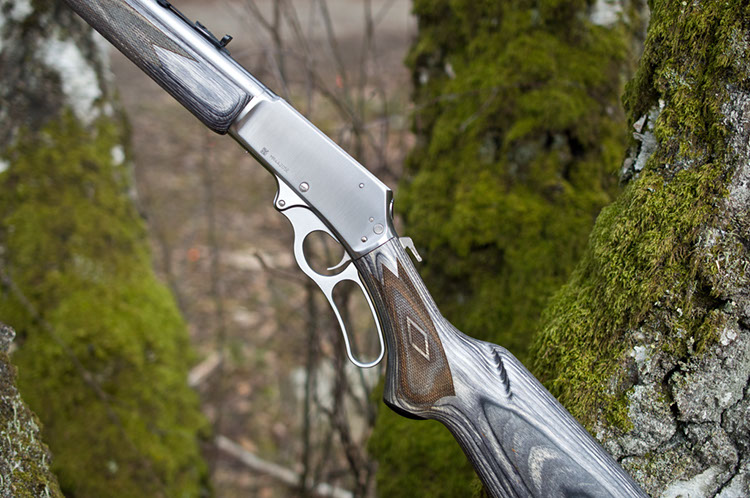
When John Marlin passed away in 1901, the company was passed to his two sons, who sought to diversify the company’s offerings. But with the onset of World War I, in 1915 Marlin was bought by a New York-based syndicate of owners who renamed the company the Marlin Rockwell Corporation. Not surprisingly for a gunmaker, Marlin Rockwell tooled up for war production and became one of the largest producers of belt-fed machine guns in the world for the American army and her allies. After the war, consumer product production restarted under the Marlin banner as a separate corporation, but struggled to gain momentum and was finally auctioned off. Oral historians say the Marlin name was so tarnished that the auction was attended by several children, a small dog, and a lawyer named Frank Kenna who bid just $100 for the right to purchase the faltering company and its $100,000 mortgage.
 Frank Kenna rebuilt the company from the ground up by slowly reintroducing some of the company’s most well-known models, as well as establishing the Marlin razor blade company. The ever-more successful company was passed on through three generations of Kenna sons until it was purchased for $42M USD from Frank Kenna the third. Throughout its tumultuous history, Marlin firearms remained in Connecticut, building an incredible 141-year manufacturing history between its initial home in New Haven and its second production facility just a few miles away in North Haven.
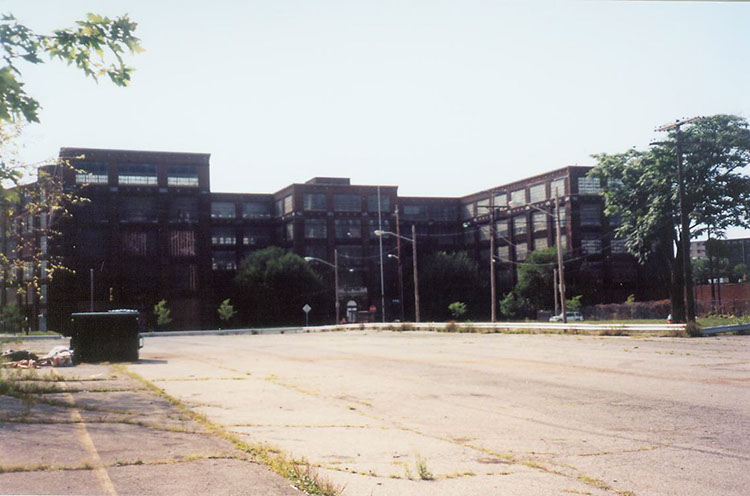 But when Remington purchased Marlin in 2007, problems quickly surfaced with Marlin’s manufacturing model. While Marlin prided itself on its family history and hand-made quality, many of the 20th and 21st century metalworking innovations had gone unnoticed by Marlin’s previous owners. In an era of computer aided design and CNC machines, Marlin rifles were still being turned out by hand on 60 year-old machines. According to Remington, conditions in the factory were so appalling that some of the staff had built sheetmetal dams around older pieces of machinery to contain their ever-leaking fluids.
Furthermore, and perhaps most telling, Remington could find no dimensional drawings for any of the firearms being produced. The precise method by which Marlin had been building some of the most popular rifles on earth had literally been passed down from generation to generation without a single pen touching paper. Not surprisingly, the combination of old machinery and a hands-on manufacturing process wasn't sustainable, and Remington was faced with the task of increasing efficiency in order to keep Marlin rifles in production. The decision was made to abandon the North Haven factory and move production to Ilion, New York and Mayfield, Kentucky, where Marlin production could restart under Remington’s roofs, with some modern provisions aimed at increasing production efficiency.
Unfortunately, but not surprisingly, many of Marlin’s production staff did not follow the company to New York. Furthermore, although Remington initially tried to transplant as much of the factory as possible from North Haven to Ilion, Marlin’s older machinery had literally settled into the floor at the old plant. When installed in the modern facility in New York, many of the old machines were performing even slower than they had in Connecticut, and the entire process was hampered by an almost entirely new production staff that had never built a lever-action rifle before.
 The result was nothing short of catastrophic. Marlin rifles went from being considered the last bastion of old-world American craftsmanship to being disparagingly known as “Remlins;” a portmanteau that also reflected their various gremlins. Problems with the first rifles built outside of Connecticut ranged from serious mechanical issues to severe quality control problems with fit and finish; not even the typically optimistic gun reviewers were able to sugar-coat the truth as they received rifles which broke the stock in half after a single shot or had areas of completely unfinished walnut on the fore end.
To make matters worse, the new rifles were no easier to fix than their hand-made brethren. Whilst the typically reliable North Haven-made Marlins had a reputation for requiring a lot of hand-fitted parts due to their old-world manufacturing methods, they didn't need frequent service. The new "Remlins" needed far more frequent repairs and parts still required as much hand-fitting as ever. This was a direct result of inconsistencies in production due to their hand-made nature.
Furthermore, with aged machinery being staffed by Remington employees with no experience on them, the parts that were being produced were questionable in quality at best. It didn’t help that with the departure of Marlin’s staff, so too went the knowledge on precisely what sizes and shapes various parts were supposed to be. With no proper dimensional drawings to reference, rifles were doomed to roll out the door with parts that weren’t quite the right shape or size. Sharp edges inside the action weren’t deburred. Flats were left with terrible machine marks all over. They were undeniably the worst rifles Marlin had ever made. They were so bad, in fact, that many gunsmiths that specialized in Marlin rifles flat out refused to service them or charged a premium to fix early Remington-made Marlin rifles.
The only solution was to begin the long and arduous process of creating dimensional drawing for each of Marlin’s iconic guns. Since there was no single rifle that could be held up as the exemplar of a perfect Marlin rifle, the process of creating a three-dimensional model to be used for production essentially required the re-engineering of the entire firearm; a sort of distillation of generations’ worth of manufacturing know-how into a single rifle design with the tightest tolerances possible. In order to make this process easier, Marlin pared down their offerings from 29 models to just 18.
 The first rifle to be properly blueprinted was the mainstay of the Marlin line, the 336. As it was quite similar internally, the 1895 blueprints followed shortly after. To make the most use of these drawings, production engineers also revisited the Marlin manufacturing process. They made significant investments in new machinery and configured the production line in such a manner that, although the staff and machinery remained physically inside a Remington plant, the Marlin production line operated as a discrete entity unto itself; essentially forming a Marlin manufacturing facility inside a Remington manufacturing facility.
Unfortunately, the first of Remington’s dimensional drawings weren’t completed until 2012, which meant a long five year wait for Marlin fans. This had very serious industry effects, as companies like Rossi and Henry gained significant market share on the collapse of Marlin’s quality control.
However, since 2012, things have been looking up, and Marlin is slowly reintroducing new models as more blueprints are completed and the production line staff get ever better at making rifles. In the last few years, Remington has invested in $8M worth of new CNC machines, as demand for Marlin rifles begins to recover to pre-2007 levels. But are the modern Marlins, produced largely by CNC machines, comparable with the hand-made Marlins of yesteryear?
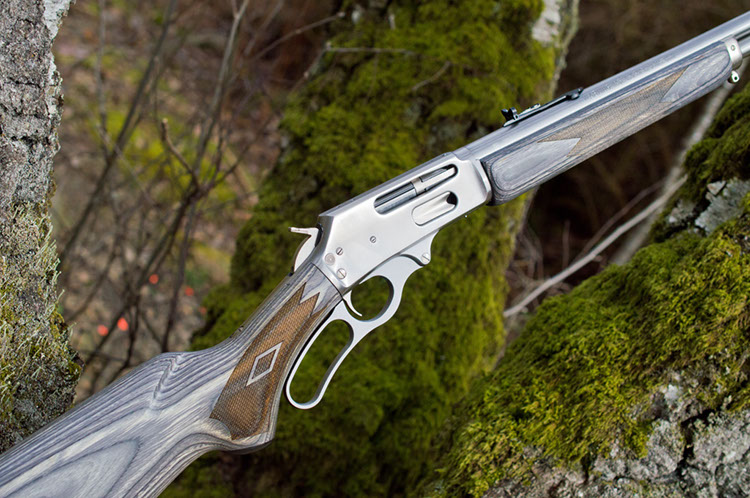
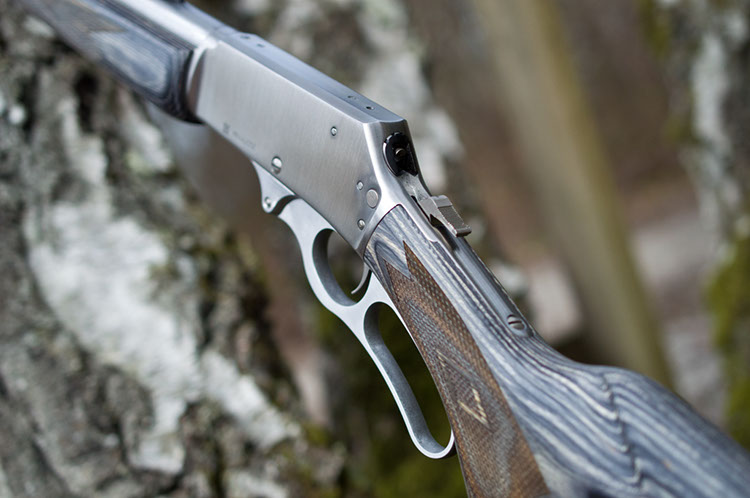
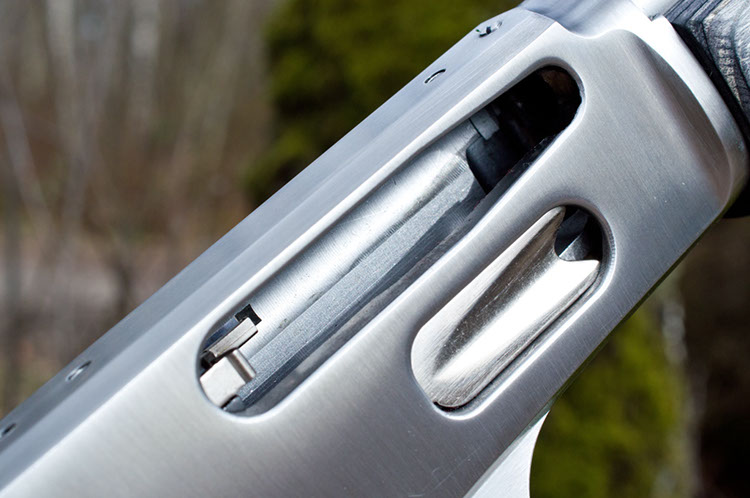 Which brings us to this: The latest iteration of the venerable Marlin 336. This model, specifically known as the 336XLR (the XLR series of rifles being built around Hornady’s Leverevolution ammunition), is one of the more popular Marlins in production and sports a stainless steel barrel and action with laminate furniture. As a result, it’s far more resistant to corrosion and the elements, and has become a favourite amongst Canada’s hunters.
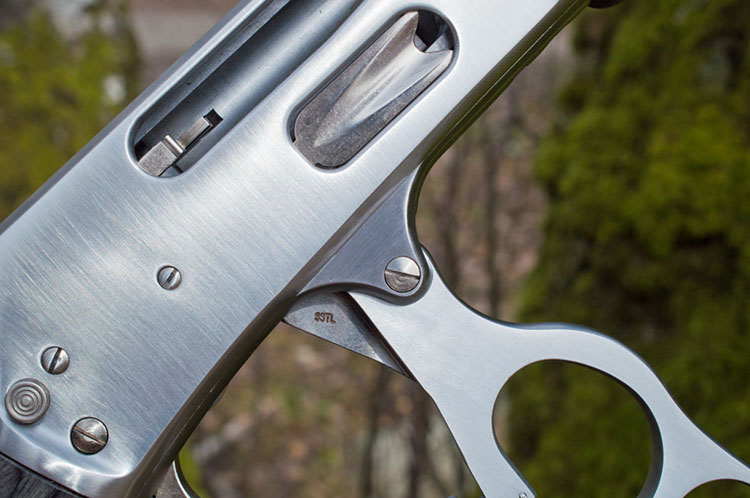 During our testing it was easy to see why. Regardless of anything else, we’ve always found lever-action rifles come up to the shoulder incredibly well, and the 336XLR is certainly no exception. And they carry well. As you can see in the pictures, there are no bolt-knobs or other paraphernalia sticking out the sides of a 336XLR; it’s just one smooth, slick package. It’s pretty easy to see why these became popular amongst horsemen who needed a rifle that could slide in and out of a scabbard with ease. And the balance is perfect, too. Literally. If you put a 336XLR on your finger and find the balance point, it hovers somewhere between the front of the action and the front of the ejection port, depending on how many rounds are in the tubular magazine slung beneath the barrel. As you can imagine, that puts the balance point right between your hands.
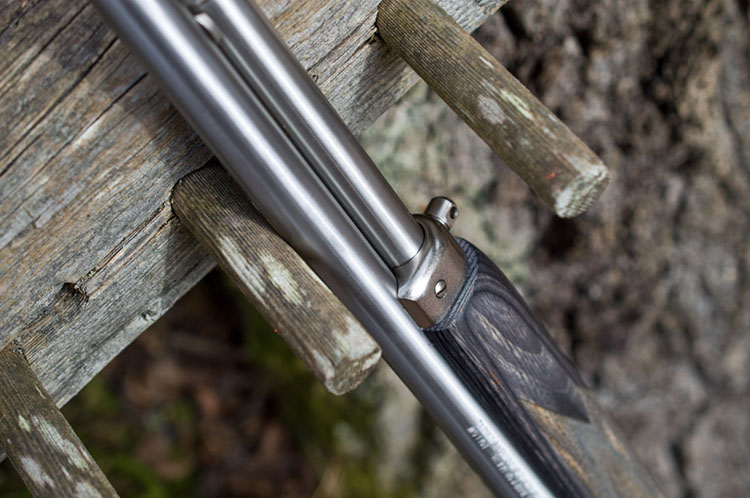 Accuracy is helped by the 336XLR’s unique features. First off, by being stainless steel, you typically are rewarded by a better bore. This is due to the softer nature of stainless steel as compared to the chrome moly steel otherwise used in barrels. Although this can be offset with careful barrel making and fresh tools, in the reality of high-volume production, stainless steel barrels are not as stressful on tools and are more forgiving so they usually come off the production line with slightly better bores. Speaking of rifling, unlike most .30-30 Marlin rifles, the 336XLR series has a slightly slower twist rate, borrowing the 1-12” twist rate (most Marlin .30-30s use 1-10” rifling) usually associated with Winchester rifles to better stabilize modern projectiles.
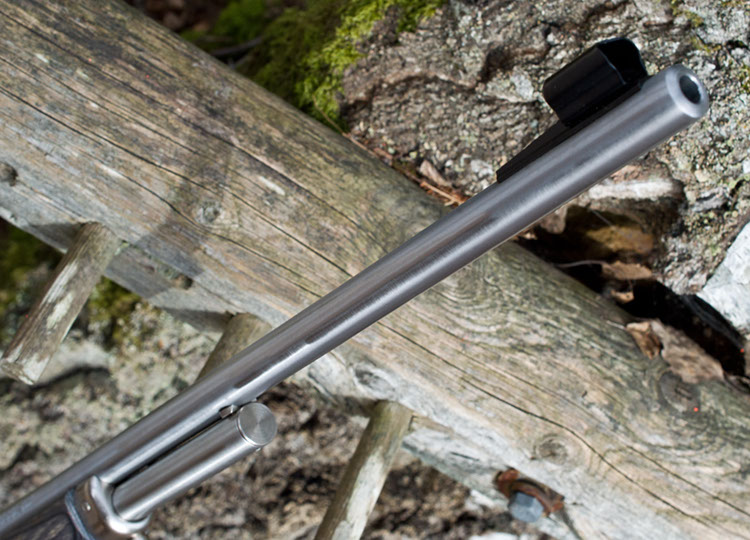
Furthermore, the 336XLR models forgo the traditional barrel bands found on 336 carbines and feature a barrel that's four inches longer. This pushes just a bit more velocity out of Hornady’s Leverevolution ammunition and increases accuracy. On ours, the result was groups that typically ran about 2 MOA or slightly larger. Certainly not inaccurate by any stretch and definitely adequate for deer and the like.
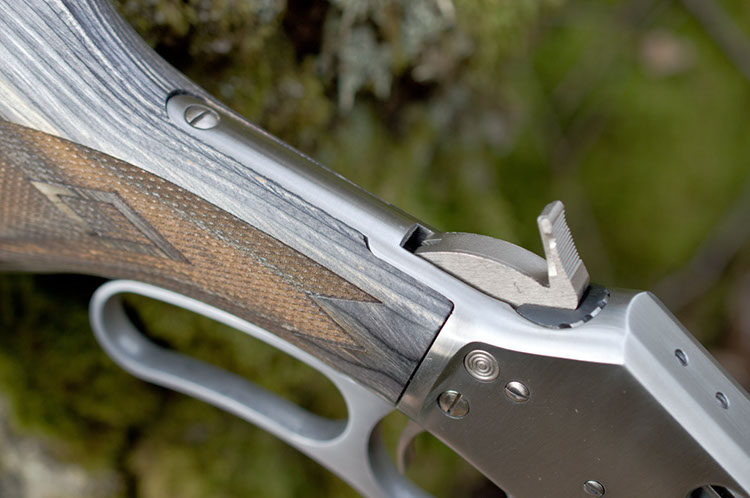 Throughout our testing, the 336XLR was 100% reliable. Of course, being a lever gun we didn’t put the many hundreds of rounds through it that we would with some other firearms, but these rifles do not typically see high volumes of fire. Through the hundred or so rounds we did fire, however, not a hiccup was encountered. All systems operated exactly as they should, from the very soft recoil pad to the cross-bolt safety. With regards to the trigger, it was slightly on the too-heavy side (breaking at just over 7 pounds on our scale) but totally free of any creep. Were it up to us, we’d like to see the pull weight closer to 5 pounds, and there are no shortage of trigger kits and jobs to accomplish that task.
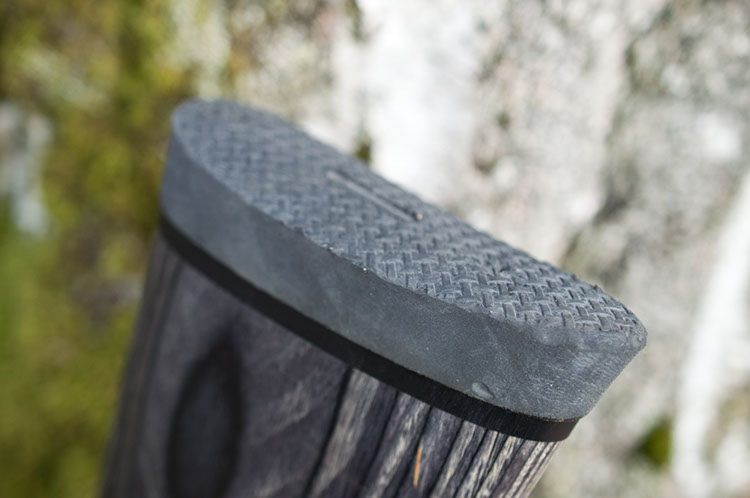
However, there are some fit and finish issues. The stock, for example, is not fitted to the action evenly, and the sling mount inset into the butt was quite simply done wrong (it appears to be off-center). Even the recoil pad wasn’t spared and looks like it’s been crudely eroded away at the toe by some means.
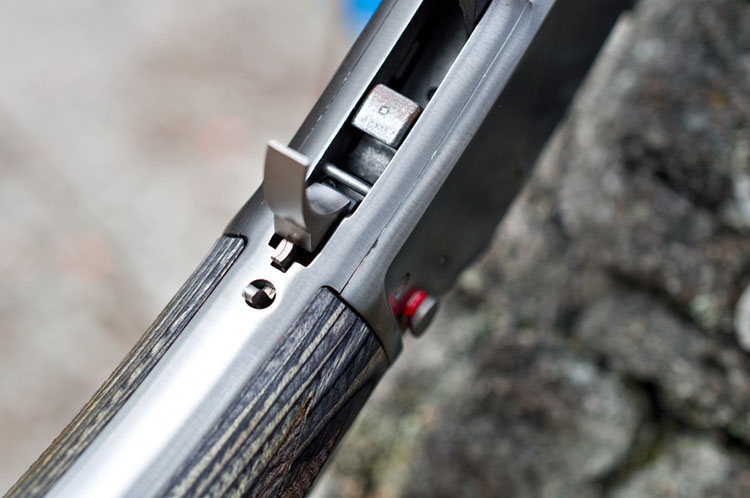 The metalwork in areas is excellent, and both externally and internally the receiver itself seems very well machined. But there are still problems. The bolt, when closed, did not quite line up with the back of the receiver and was not totally square across its exposed rear face. The bottom, where the trigger assembly is inserted into the receiver housing, had what appeared to be pry-marks on it. And the brushed finished was inconsistent on both the receiver and barrel in places. On the barrel, it was spotty around the front sight, and on the receiver appeared to change direction where the lever hinges.
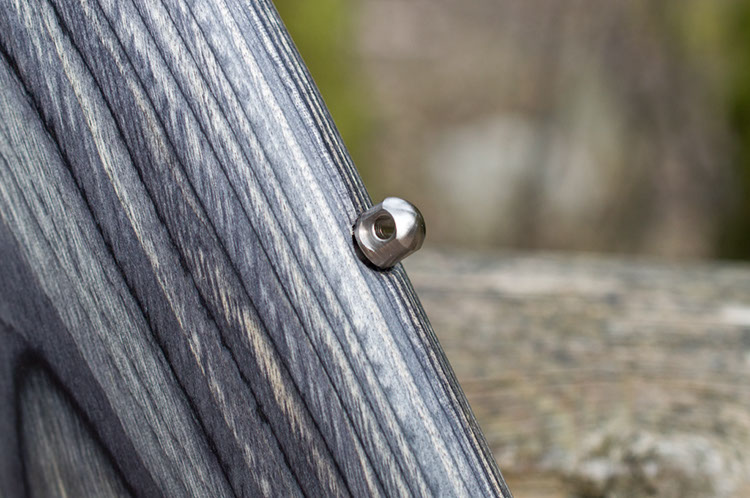 Again, none of these issues had any bearing on the rifle’s performance, and to be fair we did take a particularly close look at this rifle. Holding it up alongside an older Marlin 336, we found the wood on the original rifle to be much more tightly fitted and even, with more care taken by the Marlin factory to round off any exposed edges where the furniture met the action. When it comes to machining, however, the older gun is not demonstrably better than the new one, so obviously Marlin has made strides there. And compared to the rifles being produced during the truly dark ages (of which we had none on hand… thankfully) that immediately followed Marlin’s relocation there is absolutely no comparison; the latest guns are vastly superior in every way.
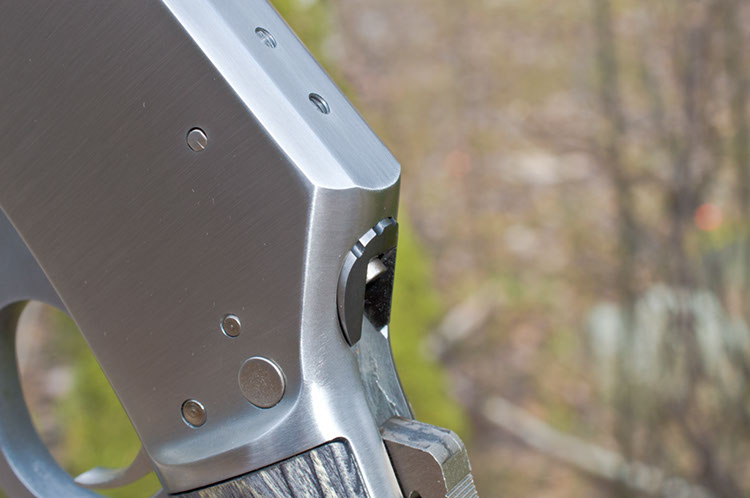 Being only three years removed from Remington’s first actual 336 blueprint, it makes sense that the priority would be on building functional guns if not perfectly pretty ones. That being said, were we a potential buyer, this particular gun would be going back to the retailer for an exchange if for no other reason than the pry marks on the bottom and the rear of the bolt not lining up with the receiver. On an almost $1,000 rifle, there’s simply no reason for there to be any sort of pry mark on it, and those are the sort of issues that once noticed, can’t be unseen.
So, would we hesitate to buy a new Marlin? Yes and no. For example, as we just stated, we would be looking to exchange our tester 336XLR were we a potential owner. But that is due to the level of quality we expect of a rifle carrying the $920ish dollar price tag that the 336XLR does, though most Marlin rifles can be had for far less. A standard blued 336 carbine, for example, can be found for less than $500. 1894 and 1895 models, chambered in a variety of calibres, typically ring in between $650 and $700. Would the level of craftsmanship and quality demonstrated with our 336XLR be acceptable at any of those price points? With the exclusion of that damned pry mark, yes - absolutely. Were we to take this test gun in to exchange it and find our replacement rifle was devoid of that solitary pry mark and one or two other issues, we’d be happy. It is supposed to be a working gun, after all, and given the progress that’s been made as of late to bring Marlin back to its former glory, we have no doubt they will only continue to get better.

 SUBSCRIBE TO CALIBRE MAGAZINE
$30.00 / year
SUBSCRIBE TO CALIBRE MAGAZINE
$30.00 / year
 UNAPOLOGETICALLY CANADIAN MEN'S T-SHIRT
$29.00
UNAPOLOGETICALLY CANADIAN MEN'S T-SHIRT
$29.00
 UNAPOLOGETICALLY CANADIAN WOMEN'S T-SHIRT
$29.00
UNAPOLOGETICALLY CANADIAN WOMEN'S T-SHIRT
$29.00